

Key Takeaways
-
Telecom asset reuse and refurbishment are distinct processes that recover value and reduce risk when surplus network equipment is properly identified, tested and sanitized.
-
A seven-gate decision framework covering inventory, grading, OEM support, compatibility, data sanitization, disposition and reporting prevents misclassification and supports audit-ready outcomes.
-
RAN, core, optical and passive equipment follow different reuse or refurbishment paths based on functionality, firmware support and sanitization requirements.
-
OEM end-of-support dates and firmware compatibility matrices often close the reuse window faster than operators expect.
-
Full Circle Electronics delivers certified, white-glove telecom asset reuse and refurbishment programs across the U.S., Mexico and Colombia. Scope a reuse program for the next project.
What Telecom Asset Reuse and Refurbishment Actually Means
The distinction between reuse, refurbishment, resale and recycling drives handling requirements, timelines and value outcomes.
Reuse avoids new procurement by redeploying a functional asset within the same or a different network environment. Refurbishment extends service life by restoring an asset that has failed cosmetic or functional criteria. Resale recovers capital through secondary-market channels when internal redeployment is not warranted. Recycling applies to assets that are nonfunctional, unsupported or fail data security requirements.
Several standards anchor this framework. NIST SP 800-88 governs data sanitization on decommissioned hardware. R2v3 and e-Stewards define responsible recycling and enforce a reuse-first hierarchy. The GSMA’s Strategy Paper for Circular Economy: Network Equipment (March 2022) provides a sector-specific framework for applying circular economy principles to network expansion and replacement.
The Telecom Asset Reuse and Refurbishment Decision Framework
A disciplined telecom asset reuse and refurbishment process moves through seven sequential decision gates. Each gate defines a required action and a clear consequence.
-
Asset Identification and Serialized Inventory Capture. Every asset needs a manufacturer, model, serial number, site, rack position and configuration status before it moves. Without that record, data-bearing devices travel with general scrap, reuse candidates get misclassified as recycling and no chain-of-custody record exists for audit.
-
Functional and Cosmetic Grading. Each asset must power on, pass basic functional tests and meet cosmetic standards for redeployment or resale. A four-tier grading approach working with clean configuration, functional with cosmetic wear, powered but untested, and failed or incomplete provides a common triage language. Grade sets the disposition path and does not predetermine final value.
-
OEM Support Lifecycle and Firmware Eligibility Check. Assets must sit within OEM support and remain eligible for current firmware and software updates. Hardware outside OEM support carries integration risk and may be ineligible for security patches. The OEM section below covers this gate in more detail.
-
Compatibility and Integration Risk Assessment. Each asset must align with the current network architecture, software release matrix and adjacent systems. A physically functional BBU or optical transport platform that cannot interoperate with current software releases becomes a resale or recycling candidate rather than a reuse candidate.
-
Data Sanitization Requirement. Every asset requires classification by data profile and required sanitization method. Hardware with onboard flash, hard drives, removable media or battery-backed memory must be identified before it leaves the building. Assets with unknown storage status should be treated as sensitive until verified.
-
Disposition Decision: Redeploy, Spare, Resell or Recycle. Grades, OEM status, compatibility and sanitization outcomes combine into a disposition decision. Internal redeployment, spare inventory, secondary-market resale and certified recycling act as distinct value levers with different financial and ESG outcomes.
-
Documentation and Value-Recovery Reporting. Every asset must tie to a specific disposition outcome, sanitization record and financial settlement. A serialized inventory report, certificates of destruction or erasure and a disposition summary form the minimum documentation set for audit readiness and ESG reporting.
Walk through the framework against a specific asset portfolio.
Asset Classes That Drive Telecom Reuse and Refurbishment
Telecom equipment qualifies for refurbishment when it is functional, within or near OEM support, compatible with current network software and capable of passing sanitization requirements. Reuse applies when the asset meets those criteria without repair or upgrade. The asset classes below guide disposition by category.

RAN: BBU, RRU, Antennas, Small Cells. Baseband units and remote radio units from recent 4G and 5G deployments are strong reuse and refurbishment candidates when firmware remains supported and secure, matches the target network software release and sits within OEM software support. A large installed base of recently deployed RAN equipment arose from the sharp revenue decline in 2023 and 2024 and could later enter secondary channels. That trend creates supply for refurbishment programs. Antennas and passive RRUs with no onboard storage require RF performance testing and no data sanitization. Small cells with embedded configuration storage require sanitization before reuse or resale.
Core: Routers, Switches, Servers, Firewalls. Core network hardware forms the highest-value category for secondary-market resale. Enterprise-class switches and routers account for an estimated 55 to 65 percent of unit volumes in the refurbished networking equipment market. Every device in this category contains configuration files, credentials, routing tables and management-plane access data. Data sanitization is mandatory before reuse, resale or recycling.
Fixed and Optical: Optical Transport, Fiber Termination, DSL and Copper Equipment, CPE. Accelerating optical transport replacement cycles driven by AI data center demand are releasing volumes of decommissioned optical gear into secondary channels. Optical transport platforms with coherent line cards retain significant resale value when within OEM support. CPE devices with subscriber data require sanitization. DSL and copper equipment near end-of-support typically move to recycling unless a specific secondary market exists.
Passive: Cabinets, Racks, Power Systems, Batteries, Cooling. Passive infrastructure carries no data and requires no sanitization. Cabinets and racks in good condition are strong reuse candidates. Power systems and batteries require functional testing and, for lithium batteries, controlled downstream processing. Cooling units are evaluated on age and condition against refurbishment cost.
Evaluate an asset class against reuse, refurbishment and resale criteria.
OEM Support Lifecycle and Compatibility Constraints
OEM end-of-support dates often form the tightest constraint in telecom asset reuse programs. A physically functional asset that sits outside OEM software support cannot receive security patches, firmware updates or TAC assistance. Redeploying that hardware into a production network creates security and operational risk that procurement and network operations must document and accept.
Cisco’s end-of-life policy defines distinct milestones: End-of-Sale, End-of-Software Maintenance, End-of-Vulnerability and Security Support and Last Date of Support. Each milestone narrows what the asset can do in a supported network environment. Some software releases reach End of Software Maintenance within 18 months of general availability. That timing closes the reuse window faster than many operators expect.
Firmware and software compatibility matrices add a second layer of constraint. Mobile core software releases are tied to verified compatibility matrices that bind specific software versions to specific hardware platforms and companion software packages. A physically reusable asset may be ineligible for redeployment if it cannot run a software version compatible with the current network architecture.
Effective planning maps OEM support status against refresh cycles before decommissioning begins. Assets still within support and compatible with current software releases become reuse or refurbishment candidates. Assets approaching end-of-support within the expected redeployment window become resale candidates while secondary-market demand remains strong. Assets already outside support move toward recycling or parts harvesting unless a defined secondary market exists for legacy environments.
Full Circle Electronics helps operators plan around these constraints through asset evaluation, testing and refurbishment before disposition decisions lock in. Map OEM support status across a decommissioned asset portfolio.
How to Sanitize Data on Decommissioned Network Hardware
OEM support status determines whether an asset can return to service. Data sanitization determines whether it can leave the building at all.
Network hardware retains a broad range of sensitive information. Configuration files, administrative credentials, routing and switching tables, VPN keys, RADIUS shared secrets, call detail records, customer data and management-plane access information can all persist on decommissioned gear. A factory reset does not fully sanitize managed switches that retain configurations, ACLs and credentials in flash memory, or routers that retain VPN keys and certificates.
Telecom operators also fall under FCC customer proprietary network information rules in 47 CFR Part 64, Subpart U. These rules impose telecom-specific confidentiality obligations on customer information that extend to decommissioned hardware.
Sanitization methods must match the media type and the intended disposition path. Software-based wiping aligned to NIST SP 800-88 Clear or Purge concepts preserves resale options when the asset is functional and the storage is accessible and verifiable. Degaussing applies only to compatible magnetic media. Physical shredding or crushing is appropriate when media is failed, inaccessible or encrypted with unknown key status. A policy that requires irreversible destruction also points to physical methods. All of these align to NIST 800-88 standards.
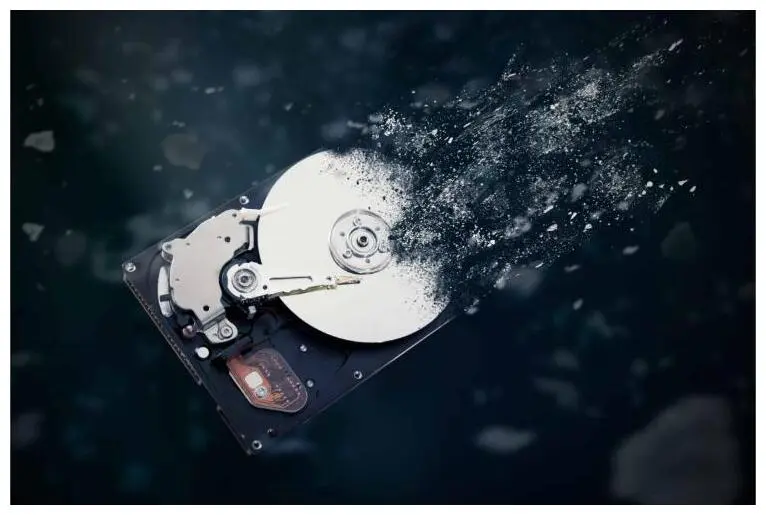
On-site data destruction performed by background-checked professionals reduces the risk of accidental data spills during decommissioning. Full Circle Electronics holds NAID AAA certification and performs NIST 800-88 compliant sanitization and destruction. Every engagement closes with a certificate of destruction, serialized tracking and audit-ready documentation. Any partner an operator selects must provide the same level of documentation.
Building the Asset-Visibility Layer for Telecom Asset Reuse
Asset visibility forms the foundation for every other step in a telecom reuse program. Operators that cannot account for every asset by serial number, location, configuration status and disposition outcome cannot make defensible reuse decisions. They also cannot satisfy audit requirements or present a credible financial and ESG case internally.

A serialized asset inventory for telecom equipment should capture manufacturer, model, exact part number, serial number, asset tag, site, rack position, installed modules, removable media status, physical condition, operational status and intended disposition. The first inventory pass should separate data-bearing devices from general scrap, flag reuse candidates for different handling and isolate loose components before they disappear into mixed loads.
Lifecycle status tracking extends the inventory into a chain-of-custody record. Every custody transfer from rack to staging, staging to transport and transport to processing requires a signed handoff with serialized asset references. A disposition outcome must tie to every serial number, including reuse, refurbishment, resale, parts harvest, recycling or destruction.
Operators tracking surplus telecom assets at scale need a platform that provides real-time visibility into shipment status, asset-level processing records and on-demand access to certificates and audit reports. Full Circle Electronics’ secure online portal supports pickup requests, logistics tracking, serialized audits, shipment and asset data and a certificates repository accessible 24/7. That infrastructure turns the asset-visibility layer into an operational system rather than a spreadsheet exercise.

Telecom Asset Reuse and Recycling Choices
The decision rule follows a clear order: reuse first, refurbish when the asset is serviceable with repair, resell when secondary-market demand exists and recycle when the asset is nonfunctional, unsupported or fails data security requirements.
Internal redeployment delivers the highest-value outcome because it avoids new procurement. Spare inventory extends the value of functional assets by supporting maintenance without new purchases. Secondary-market resale recovers capital when internal redeployment is not warranted. Parts harvesting extracts value from nonfunctional units by recovering modules, power supplies, fans, optics and line cards that retain secondary-market demand even when the chassis does not.
Recycling is the appropriate path for assets that have genuinely reached end of life. The failure outcome occurs when a reusable or refurbishable asset goes to recycling because the operator lacked inventory visibility or testing capability to identify it as a reuse candidate.
Full Circle Electronics’ reuse-first processing model, asset remarketing, revenue sharing, spare parts harvesting and certified scrap recycling provide an end-to-end path from highest-value reuse to responsible material recovery.
Value-Recovery Economics and the Business Case
Telecom asset reuse and refurbishment function as a financial strategy. The business case rests on three value levers: avoided procurement through redeployment, recovered capital through resale and parts harvesting, and reduced repair cost through a managed spare pool.
Internal redeployment avoids new procurement costs. A functional BBU, router or optical transport platform sent to a secondary site preserves the capital that new hardware would have consumed. The same logic drives spare inventory. A managed pool of tested, sanitized spares cuts emergency procurement and shortens mean time to repair.
Secondary-market resale converts retired assets into recovered capital. The global refurbished networking equipment market is projected to grow at approximately 5.3% CAGR from 2026 to 2035, and organizations using professional ITAD services for data-wiped telecom assets can retain a substantially higher share of resale value than firms without a strategic program. Delayed decommissioning erodes that value over time.
Transparent revenue-sharing models allow operators to present a clear financial case. Recovered value from resale and parts channels offsets program costs and produces a net recovery figure that finance can audit. Full Circle Electronics provides transparent revenue-sharing models, multichannel asset remarketing and spare parts harvesting to maximize economic value from retired telecom assets.
Environmental Metrics and ESG Reporting
ESG buyers and sustainability leads need auditable metrics rather than narrative claims. Key metrics for telecom asset reuse programs include equipment reused, materials recovered, waste diverted from landfill and CO2e avoided.
Reuse generates the largest avoided-emissions benefit. A reuse-weighted ITAD methodology avoids substantially more CO2-equivalent emissions per ton of equipment processed than traditional physical recycling. Under the GHG Protocol, retired telecom assets fall into Scope 3 Category 5 for enterprise operators. Reuse reduces end-of-life treatment emissions and also reduces upstream manufacturing emissions for the receiving organization.

GRI 306 (Waste) requires organizations to disclose waste generated, waste diverted from disposal and waste directed to disposal by treatment method. Retired telecom equipment falls inside this standard for most in-scope reporters. Verifiable reporting requires a stated methodology, serial-level disposition records and downstream chain-of-custody documentation rather than aggregate tonnage figures.
Full Circle Electronics’ certified reuse-first model, R2v3 and e-Stewards recycling processes and serialized reporting infrastructure provide the documentation set that ESG disclosure requires. Certificates of destruction, recycling certificates and disposition outcome reports are accessible on demand through the customer portal.
Frequently Asked Questions
The questions below cover the points operators raise most often when scoping a reuse and refurbishment program.
What Is the Difference Between Telecom Asset Reuse and Refurbishment?
Reuse means redeploying a still-serviceable asset without modification. Refurbishment means testing, repairing or upgrading an asset to restore it to serviceable condition. Reuse delivers a higher-value outcome because it requires no additional processing. Refurbishment extends service life for assets that are functional but need repair or cosmetic restoration before redeployment or resale. Both paths outperform recycling, which recovers only material value.
Which Telecom Equipment Can Be Refurbished?
Any telecom asset that is functional, within or near OEM software support, compatible with the target network architecture and capable of passing data sanitization requirements qualifies as a refurbishment candidate. This group includes RAN baseband and remote radio units, core routers and switches, optical transport platforms, firewalls and CPE devices. Passive infrastructure such as cabinets, racks and power systems can also be refurbished when the repair cost is justified by the redeployment or resale value. Assets that are nonfunctional, outside OEM support or incompatible with current software releases typically move to resale or recycling.
How Is Data Sanitized on Decommissioned Network Gear?
As covered above, network hardware retains far more than standard IT assets. A factory reset leaves configuration files, credentials and routing tables in place. The appropriate method depends on the media type and intended disposition. Software-based wiping aligned to NIST SP 800-88 Clear or Purge concepts applies when the asset is functional and the storage is accessible and verifiable. Degaussing applies only to compatible magnetic media. Physical shredding or crushing is required when media is failed, inaccessible or subject to a policy that mandates irreversible destruction. Every sanitization event must tie to a specific serial number and carry a certificate of destruction or erasure.
What Are the Challenges of Telecom Asset Reuse?
The primary challenges include asset visibility, OEM support lifecycle constraints, compatibility risk and data security. Most operators lack a serialized inventory of surplus gear, which makes defensible reuse decisions impossible. OEM end-of-support dates close the reuse window faster than operators expect, and firmware compatibility matrices bind reuse eligibility to specific software versions. Data security on network hardware is more complex than on standard IT assets because of the range of sensitive data retained in flash memory and configuration storage. The absence of a clear, gate-based decision framework often leaves operators stalled instead of executing a program.
How Do Operators Track Surplus Telecom Assets?
A serialized asset inventory forms the foundation. Every asset should be captured by manufacturer, model, serial number, site, rack position, installed modules, removable media status, physical condition and intended disposition before it moves. Lifecycle status tracking extends the inventory into a chain-of-custody record with signed handoffs at every custody transfer. A customer web portal that provides real-time shipment tracking, asset-level processing records and on-demand access to certificates and audit reports operationalizes this layer at scale. Operators that rely on spreadsheets or pallet-level records cannot produce the serialized reconciliation that audit and ESG reporting require.
How Do OEM Support Lifecycles Affect Reuse Eligibility?
The OEM section above explains the milestones. The practical effect is that an asset outside support cannot be patched, which creates security risk in a production network. Software compatibility matrices add a second constraint. Even a physically functional asset may be ineligible for redeployment if it cannot run a software version compatible with the current network architecture. Operators should map OEM support status against refresh cycles before decommissioning begins and decide early whether to redeploy, resell or recycle.
When Should an Operator Recycle Instead of Reuse or Refurbish?
Recycling becomes the right path when an asset is nonfunctional and repair is not economically justified, when it is outside OEM support and no secondary market exists for legacy environments, when it fails data sanitization requirements and physical destruction is required or when it is incompatible with any current or foreseeable network architecture. Parts harvesting acts as an intermediate step for assets that cannot be reused or resold as complete units but contain modules, power supplies, optics or line cards with secondary-market value. Certified scrap recycling handles what remains after parts harvesting.
How Does Full Circle Electronics Support Telecom Asset Reuse and Refurbishment Across the U.S., Mexico and Colombia?
Full Circle Electronics operates certified processing facilities across eight U.S. states: Arizona, Northern and Southern California, Colorado, Florida, Georgia, Illinois and Texas, plus international operations in Mexico and Colombia. The company holds R2v3, e-Stewards, NAID AAA, ISO 9001, ISO 14001 and ISO 45001 certifications, and all employees are background-checked as required by NAID AAA. Services cover white-glove on-site decommissioning and de-racking, serialized asset inventory at the point of service, NIST 800-88 and DoD 5220.22-M compliant data sanitization and destruction, reuse-first processing, asset remarketing and revenue sharing, spare parts harvesting and certified scrap recycling. Every engagement is documented with certificates and tracked through a secure real-time customer portal.
Conclusion and Next Steps
Surplus telecom assets represent a financial and operational opportunity that benefits from a disciplined, gate-based decision framework. The seven gates turn surplus hardware into a sequence of auditable decisions that protect data, preserve capital and support ESG reporting.
Full Circle Electronics provides the execution layer for that framework. Certified processes, white-glove decommissioning, reuse-first processing, transparent revenue-sharing models and a multi-country footprint across the United States, Mexico and Colombia support complex telecom portfolios.
Recommended next steps include building the serialized asset inventory before any equipment moves, assessing OEM support status for every asset class and defining sanitization requirements by media type and policy. A structured review with Full Circle Electronics can then shape a reuse and refurbishment program tailored to the specific asset portfolio and compliance requirements.
Start a reuse and refurbishment review with the current asset portfolio.