

Key Takeaways on ITAD and Asset Recovery
- IT asset recovery focuses on revenue from resale. Full ITAD manages data security, compliance, environmental responsibility and value recovery under one auditable process.
- Organizations face five major risks without a structured program: data breaches, regulatory penalties, environmental liability, operational disruption and missed financial recovery.
- Certified ITAD programs use documented workflows with serialized inventory, NIST-aligned data destruction, refurbishment evaluation, certified recycling and centralized reporting.
- Asset recovery alone fits only when equipment has clear resale value, holds no regulated data and carries no compliance obligations that require certified documentation.
- Full Circle Electronics provides certified ITAD services with on-site capabilities and real-time reporting across its international footprint; request a program assessment tailored to organizational needs.
Defining the Distinction Between Asset Recovery and Full ITAD
IT asset recovery is the revenue-focused subdiscipline within the broader ITAD process. Its primary objective is capturing residual financial value from retired equipment through resale, buyback or remarketing. Full ITAD is the end-to-end managed process that governs data sanitization, chain-of-custody documentation, value recovery, regulatory compliance and certified recycling or destruction under a single auditable program. Asset recovery is one component inside a complete ITAD program, not a substitute for it. Understanding this distinction prevents organizations from relying on revenue-focused approaches that leave compliance and security gaps.
The Risks of Retiring Electronics Without a Structured Program
Unmanaged disposition exposes organizations to five categories of risk. Data breaches carry significant costs, and regulatory penalties compound that exposure. HIPAA violation penalties can reach substantial amounts per violation, and California’s DTSC can impose penalties for improper e-waste handling.
Environmental liability follows improper material disposal and weak downstream controls. Operational disruption results from fragmented or uncoordinated decommissioning. Missed financial recovery occurs when equipment with secondary-market value goes directly to destruction or landfill without condition assessment.
Why Informal or Fragmented Approaches Amplify These Risks
Ad-hoc handling fails because it lacks the structural accountability that procurement, security and sustainability stakeholders each require. This accountability gap appears when a recycling vendor removes equipment without producing a serial-level record of what happened to a single drive, which creates direct liability rather than a simple paperwork issue.
Fragmented vendor relationships compound this problem by producing separate, incompatible audit trails. Without a unified chain of custody, no single report can satisfy a compliance audit, an ESG disclosure or a finance reconciliation simultaneously. Informal approaches also delay action, which causes organizations to miss the optimal resale window as recovery rates drop sharply after a manufacturer’s last date of support.
The Operating Model of a Certified ITAD Program
A certified ITAD program operates as a sequential, documented workflow. Collection and logistics begin with serialized asset inventory at the point of service, before equipment leaves client control. Data destruction follows, with method selection based on NIST SP 800-88 Rev. 2 Clear, Purge or Destroy criteria tied to data sensitivity and device type.
Assets that pass sanitization receive evaluation for refurbishment, redeployment or remarketing. Non-recoverable items enter certified recycling streams. Each step is documented in a chain-of-custody record that links serial numbers to destruction certificates, disposition outcomes and downstream vendor disclosures. Centralized reporting consolidates this data into audit-ready outputs accessible to IT, compliance, finance and sustainability teams.
Full Circle Electronics delivers this model across its facilities, with on-site de-racking, NIST-compliant data destruction and a secure customer portal that provides real-time tracking and on-demand certificate access.
Discuss asset volume, compliance requirements and geographic footprint with ITAD specialists to structure a program that addresses specific needs.
Data Security at End-of-Life: Protecting Sensitive Information
Issue: Data-bearing assets that leave organizational control without verified sanitization remain a breach vector. Studies have found that a significant percentage of used devices purchased online contained recoverable personally identifiable information, including hard drives, most originating from vendors claiming secure data wiping.
Common failure points: Factory resets do not permanently erase data. Standard overwrite procedures do not adequately sanitize SSDs, NVMe drives or embedded flash media because wear-leveling algorithms and over-provisioned space can leave original data recoverable. Certificates of destruction that lack serial numbers, sanitization method details or pass-or-fail distinctions create audit gaps instead of closing them.
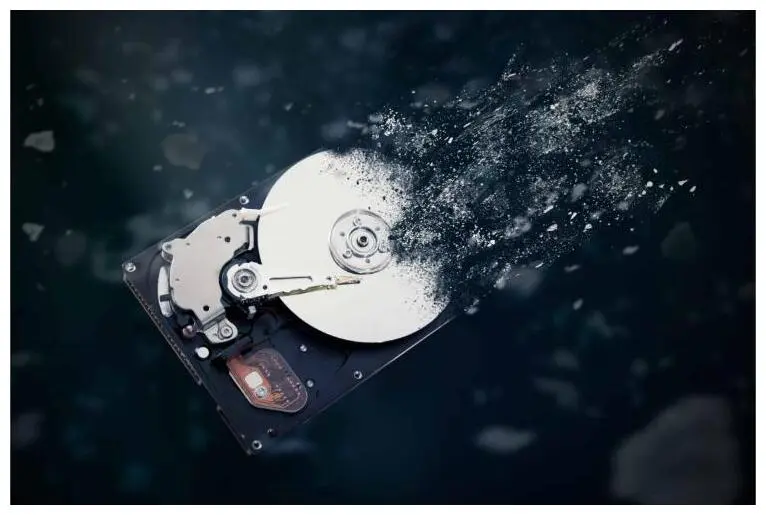
Solution features: A certified program applies NIST SP 800-88-aligned methods, including software wiping, degaussing, crushing and shredding, selected by data sensitivity. Each device receives a serialized certificate of destruction. NAID AAA certification mandates screened employees, audited chain-of-custody procedures, validated sanitization processes and unannounced audits.
Buyer evaluation criteria: Confirm that a provider holds NAID AAA certification, issues serial-number-linked destruction certificates and can demonstrate on-site destruction capability for assets that must not leave the facility.
Regulatory and Policy Compliance: Meeting Formal Obligations
Issue: HIPAA, GLBA, SOX, GDPR, CCPA, FERPA and ITAR each impose specific obligations on how data-bearing assets are handled at end-of-life. Organizations have incurred significant fines and penalties after hiring an uncertified moving company for server decommissioning instead of a certified ITAD provider.
Common failure points: Many organizations assume that a recycler’s general certification covers their specific regulatory obligations, which creates a false sense of security. SOX requires defensible documentation of how financial data on retired systems was handled, and ITAR requires controlled destruction workflows for defense and aerospace hardware. These examples show how standard recycling programs fail to address sector-specific rules.
Solution features: A certified ITAD program produces the documentation set that regulators and auditors require. This set includes chain-of-custody logs, serialized intake records, wipe confirmation or destruction certificates tied to specific devices, downstream vendor disclosures and a final disposition report. Full Circle Electronics supports HIPAA, PCI-DSS, ITAR, NIST 800-88 and DoD 5220.22-M compliance frameworks with specialized workflows for defense and healthcare clients.
Buyer evaluation criteria: Verify that a provider can produce regulation-specific documentation, holds relevant certifications for the industries served and maintains controlled workflows for ITAR or other restricted-material categories.
Environmental and Circular-Economy Outcomes: Capturing Reuse Value
Issue: Global e-waste levels have risen substantially since 2010 and are projected to continue rising. Only a small percentage of the e-waste produced globally was formally recycled, which leaves metals valued at substantial amounts unrecovered.

Common failure points: Routing functional equipment directly to commodity recycling streams destroys reuse value and produces a weaker sustainability outcome than refurbishment. Equipment recovered for reuse counts as avoided emissions under the GHG Protocol’s Scope 3 frameworks, which provides a stronger ESG outcome than recycling alone.

Solution features: A reuse-first ITAD program evaluates every asset for refurbishment before routing it to recycling. e-Stewards Version 4.1 certification bans all electronics exports to developing countries and requires prior NAID AAA and ISO 14001 certification. Full Circle Electronics holds e-Stewards, R2v3 and ISO 14001 certifications and prioritizes refurbishment to support circular-economy outcomes for ESG reporting.
Buyer evaluation criteria: Confirm that a provider holds e-Stewards or R2v3 certification, documents downstream vendor relationships and can report reuse rates, material recovery volumes and emissions impact avoided.
Operational Efficiency During Decommissioning Projects
Issue: Data center decommissioning, office refreshes and infrastructure retirements create operational disruption when logistics are uncoordinated or when internal staff must manage physical removal and asset tracking.
Common failure points: Fragmented vendor relationships require separate scheduling, separate documentation and separate reconciliation. Internal teams absorb labor costs that belong outside their core function. Delays in pickup extend the time retired equipment occupies floor space and postpone value recovery.

Solution features: White-glove decommissioning services handle physical de-racking, de-stacking, serialized inventory validation and secure transport under a single coordinated workflow. Full Circle Electronics provides on-site asset reconciliation at the point of service, which removes the need for client staff to manage physical removal or tracking.
Buyer evaluation criteria: Confirm that a provider offers on-site de-racking, serialized intake at pickup and a single point of contact for multi-phase decommissioning projects.
Multi-Site and Cross-Border Logistics Management
Issue: Organizations with facilities across multiple states or countries face inconsistent service quality, incompatible documentation formats and regulatory complexity when using regional vendors for each location.
Common failure points: Basel Convention amendments require Prior Informed Consent for all cross-border shipments of both hazardous and nonhazardous e-waste, including decommissioned laptops, servers and networking gear. Providers without international processing facilities cannot maintain a consistent chain of custody across borders.
Solution features: A provider with certified facilities in multiple countries can execute local service while maintaining unified reporting. Full Circle Electronics operates certified facilities across multiple U.S. states and in Mexico and Colombia, which supports enterprises that require consistent ITAD outcomes and centralized documentation across an international footprint.
Buyer evaluation criteria: Confirm that a provider holds certifications at each facility, not just at a headquarters location, and can produce consolidated disposition reports across all sites.
Financial Recovery and Cost Visibility From Retired Assets
Issue: Organizations that default to destruction without condition assessment leave recoverable value unrealized. A significant percentage of laptops are lost or untracked in many enterprise environments, and a portion of those devices contain sensitive data that was never sanitized.
Common failure points: Opaque revenue-sharing models prevent finance teams from verifying what was sold versus recycled. Without serialized asset reporting, procurement leaders cannot calculate actual recovery rates or offset costs against new hardware budgets.
Solution features: Transparent revenue-sharing programs report asset-level outcomes, including what was remarketed, at what grade and what was recycled, so finance teams can reconcile recovered value against disposition costs. Full Circle Electronics provides detailed reporting through a secure customer portal with CSV export capability for integration into financial reporting workflows.
Buyer evaluation criteria: Require itemized disposition reports that link serial numbers to remarketing or recycling outcomes and confirm that revenue-sharing terms are documented before engagement.
Brand and Product Control for Non-IT Assets
Issue: Defective, recalled or expired branded goods that enter secondary markets create liability and reputational risk. Standard ITAD programs focused on IT hardware may not include secure destruction of non-IT branded materials.
Common failure points: Brokers who outsource destruction cannot maintain an unbroken chain of custody. Without in-house shredding capability, a provider cannot confirm that branded goods were destroyed rather than diverted.
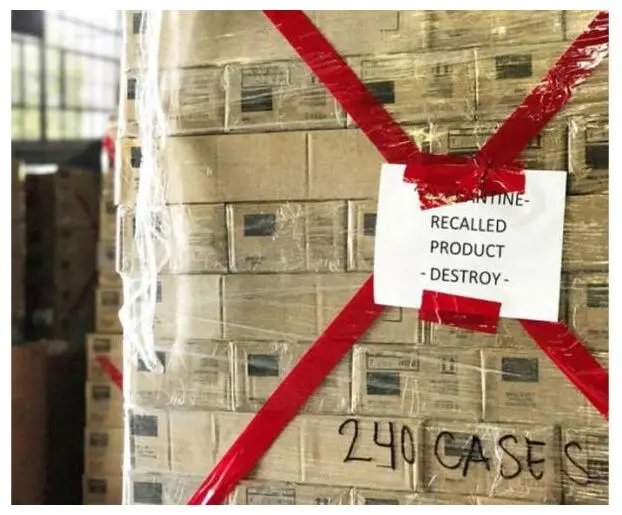
Solution features: In-house product destruction services handle branded goods, recalled inventory and prototypes under the same chain-of-custody framework as IT hardware. Full Circle Electronics performs destruction in-house rather than through broker networks, which maintains a single, unbroken custody record from intake to final disposition.
Buyer evaluation criteria: Confirm that a provider performs destruction in-house, issues serialized destruction certificates for non-IT materials and can accommodate large-format or nonstandard items.
Comparing ITAD and Disposition Provider Models
In-house handling gives organizations direct control but requires internal staff, equipment and documented processes that most organizations do not maintain. It rarely produces audit-ready chain-of-custody records and cannot scale to large decommissioning events.
General recyclers process materials by weight and commodity type. They typically do not provide serialized data destruction certificates, asset-level chain-of-custody records or regulatory compliance documentation. Standard recycling remains a linear, terminal process focused on material recovery, not data risk management.
Brokers aggregate assets and outsource processing to third parties. The chain of custody passes through multiple hands, and the originating organization cannot verify that destruction standards were applied at each step. Broker models conflict with NAID AAA requirements for unbroken custody.
OEM take-back programs offer convenience for single-brand environments but typically cover only that manufacturer’s equipment, produce limited documentation and may not meet the data destruction standards required for regulated industries.
Certified full-service providers that hold R2v3, e-Stewards and NAID AAA simultaneously deliver data security, regulatory compliance, environmental accountability, value recovery and centralized reporting under a single auditable program. This model is the only approach that satisfies all five stakeholder groups: IT, security, sustainability, operations and finance.
Due-Diligence Checklist for Selecting an ITAD Partner
This checklist outlines minimum documentation and capability standards that separate certified ITAD providers from general recyclers or brokers. The following criteria apply to most enterprise ITAD evaluations, although specific requirements vary by industry, geography and asset type.
- Certifications held at each processing facility, not only at a corporate level (R2v3, e-Stewards, NAID AAA, ISO 14001, ISO 9001)
- Data destruction methods supported and alignment with NIST SP 800-88 Rev. 2 Clear, Purge and Destroy categories
- On-site destruction capability for assets that cannot leave the facility
- Serialized chain-of-custody documentation from pickup through final disposition
- Downstream vendor disclosure and audit rights
- Geographic coverage matching the organization’s facility footprint, including international locations
- Regulatory framework support relevant to the organization’s industry (HIPAA, ITAR, PCI-DSS, FERPA)
- Employee background screening practices, as required by NAID AAA
- Transparent revenue-sharing terms with asset-level reporting
- Customer portal or reporting system with on-demand certificate access
- Capacity to handle the organization’s asset volume, mix and decommissioning timeline
Request a tailored assessment of how Full Circle Electronics’ certified program aligns with these criteria for specific environments.
Decision Framework for Asset Recovery and Full ITAD
Asset recovery as a standalone approach fits when equipment has clear secondary-market value, contains no regulated data, is transferred within the same organization or to a vetted buyer under a documented agreement, and carries no regulatory obligation that requires certified destruction documentation.
Full ITAD becomes mandatory when any of the following conditions apply, because each condition introduces security, compliance or reporting requirements that asset recovery alone cannot satisfy:
- Assets contain or may have contained regulated data, including PHI, PII, financial records, CUI or ITAR-controlled information
- The organization operates in a regulated industry such as healthcare, financial services, government, defense or education
- Assets are being permanently retired rather than redeployed internally
- Multi-site or cross-border logistics require consistent chain-of-custody documentation
- ESG reporting obligations require verified reuse rates, recycling outcomes or emissions data
- Audit readiness requires serialized destruction certificates linked to individual assets
- Brand or product control requires in-house destruction with documented custody
For most enterprise environments, full ITAD functions as the baseline requirement, and asset recovery operates as the value-recovery component within that program rather than as an alternative.
Frequently Asked Questions
What is the difference between IT asset recovery and ITAD?
IT asset recovery is the process of capturing residual financial value from retired equipment through resale, buyback or remarketing. ITAD is the broader end-to-end program that governs data sanitization, chain-of-custody documentation, regulatory compliance, value recovery and certified recycling or destruction. Asset recovery is one component within a full ITAD program. Organizations that treat them as equivalent risk missing the compliance, documentation and environmental accountability requirements that full ITAD provides.
What certifications should an ITAD provider hold?
The minimum acceptable standard for providers handling sensitive data includes R2v3 or e-Stewards for environmental responsibility and downstream accountability, NAID AAA for independently verified data destruction and ISO 9001 or ISO 14001 for quality and environmental management. Providers serving regulated industries should also support HIPAA, PCI-DSS, ITAR or FERPA compliance frameworks as applicable. Certifications should be held at each processing facility, not only at a corporate headquarters level. Full Circle Electronics holds R2v3, e-Stewards, NAID AAA, ISO 9001, ISO 14001 and ISO 45001, though certifications vary by facility.
How does a certified ITAD program handle cross-border logistics?
Cross-border ITAD requires compliance with the Basel Convention’s Prior Informed Consent requirements for e-waste shipments, local environmental regulations in each country and consistent chain-of-custody documentation across all jurisdictions. A provider with certified processing facilities in each country of operation can execute local service while maintaining unified reporting. Full Circle Electronics operates certified facilities in the United States, Mexico and Colombia, which enables enterprises with international footprints to work with a single accountable provider rather than managing separate regional vendors.
When is on-site data destruction required instead of off-site processing?
On-site data destruction fits when assets contain highly sensitive data that must not leave the facility before sanitization, when regulatory or contractual requirements specify on-site destruction or when organizational risk tolerance does not permit transport of unsanitized media. NIST SP 800-88 Rev. 2 defines Destroy-level sanitization, including physical shredding or disintegration, as the appropriate method for highest-sensitivity data or media that cannot be verified as sanitized. Full Circle Electronics provides on-site data destruction performed by background-checked professionals, with NIST-compliant wiping, crushing and shredding available at client locations.
How does a reuse-first ITAD program support ESG reporting?
A reuse-first program evaluates every asset for refurbishment and remarketing before routing it to recycling. Equipment recovered for reuse generates avoided-emissions credits under the GHG Protocol’s Scope 3 frameworks, which produces a stronger sustainability outcome than recycling alone. Certified providers document reuse rates, material recovery volumes and downstream recycling outcomes in formats that support ESG disclosures. Full Circle Electronics prioritizes refurbishment and provides reporting through its customer portal that captures the data sustainability and ESG officers need for internal and external reporting obligations.
Conclusion: Aligning ITAD Strategy With Risk and Value
IT asset recovery and full ITAD serve different purposes and carry different risk profiles. Asset recovery captures financial value, and full ITAD governs the entire retirement process, including data security, regulatory compliance, environmental accountability and value recovery, under a single auditable program. For most organizations in regulated industries, full ITAD functions as the required baseline, with asset recovery serving as the value component within it. Selecting a narrow approach when full ITAD is required creates preventable exposure across data security, compliance, environmental and financial dimensions.
Full Circle Electronics delivers certified, end-to-end ITAD with white-glove on-site services, NIST-compliant data destruction, transparent revenue sharing and real-time reporting through a secure customer portal. With over 20 years of experience and the comprehensive certification stack detailed earlier, Full Circle Electronics provides an auditable, reuse-first program that IT, security, sustainability, operations and finance leaders can rely on.
Schedule a consultation to receive a tailored quote for ITAD and asset recovery needs.