

Last updated: July 28, 2026
Key Takeaways for IT and Sustainability Teams
- Electronics recycling certifications shape environmental liability, data security and ESG reporting credibility for IT and sustainability leaders.
- e-Stewards enforces stricter export bans and deeper downstream accountability than R2v3, including multi-tier audits and GPS tracking.
- Organizations handling ITAR-controlled hardware gain stronger chain-of-custody documentation through e-Stewards and Full Circle Electronics’ dual-certified ITAR workflows.
- Dual certification reduces RFP objections and internal audit risk by satisfying both e-Stewards and R2v3 procurement requirements at once.
- Full Circle Electronics holds both e-Stewards and R2v3 certifications with multi-country operations; contact us to align certification strategy with specific compliance needs.
Export Controls and Downstream Accountability: e-Stewards vs R2v3
The e-Stewards standard, administered by the Basel Action Network, prohibits export of hazardous e-waste to any non-OECD developing country with no exceptions. This prohibition includes functional equipment. R2v3, by contrast, only prohibits export of non-working electronic equipment to developing countries and permits export of hazardous materials to receiving facilities that meet equivalent standards.
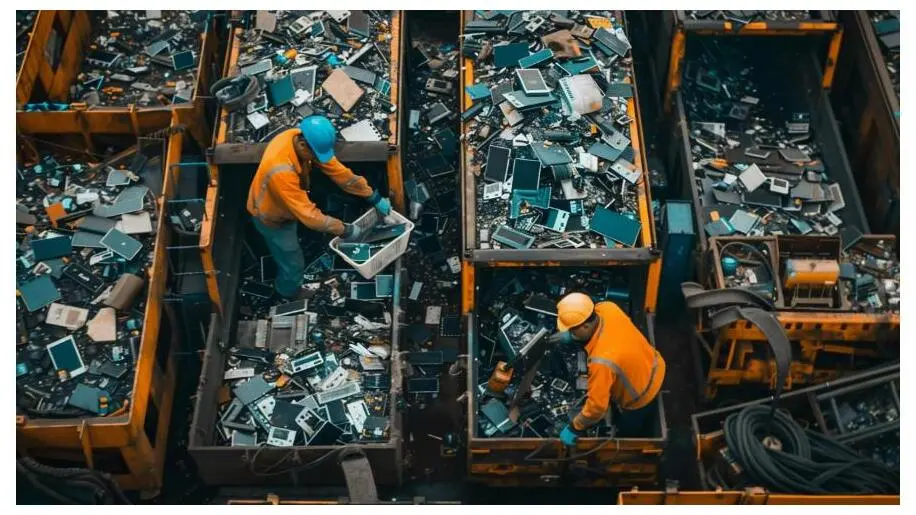
Downstream accountability requirements differ in depth and reach. R2v3 limits formal due diligence to two tiers of downstream vendors, requiring documented audits of brokers, smelters and refiners. e-Stewards mandates audits through the final disposition of materials, which can extend across three or more tiers. e-Stewards also deploys GPS tracking through its e-Trash Transparency Project to detect materials that appear at unauthorized locations.
Labor-practice rules diverge sharply. e-Stewards prohibits coerced or prison labor anywhere in the downstream recycling chain. R2v3 permits prison labor with restrictions such as proper training and safety standards. For organizations with supply-chain ethics commitments or ESG reporting obligations, this distinction carries material weight.
Environmental management system expectations also differ. e-Stewards requires actual ISO 14001 and ISO 45001 certification, not mere conformance. R2v3 requires management systems that conform to those ISO standards but does not require independent certification to them.
Export Bans for Regulated and High-Scrutiny Sectors
Organizations with a zero-export policy for hazardous materials have a clear decision. e-Stewards is the only standard that enforces that policy without exceptions. A Basel Action Network investigation found that several of the largest U.S. e-waste exporters held R2 certifications, which shows that R2 certification alone does not prevent hazardous export activity.
The Basel Convention Ban Amendment, which took effect on Dec. 5, 2019, now prohibits export of hazardous wastes from OECD and EU member states to non-OECD countries. This amendment represents a major shift in global e-waste trade law and raises the compliance floor for certified recyclers that operate internationally.
Organizations in financial services, healthcare or government that face regulatory scrutiny over supply-chain practices gain clearer protection under e-Stewards. Its absolute prohibition removes ambiguity that R2v3’s equivalency provisions leave open.
Downstream Due Diligence and ITAR Chain-of-Custody Risk
Organizations handling ITAR-controlled hardware face a specific chain-of-custody challenge. They must demonstrate that sensitive components did not reach unauthorized parties at any point in the disposition chain. Standard recycling documentation does not meet that burden.
e-Stewards’ multi-tier downstream audit requirement and GPS-based tracking create a stronger evidentiary record than R2v3’s two-tier obligation. For defense and aerospace clients, this deeper chain-of-custody documentation supports ITAR compliance workflows and reduces audit exposure.
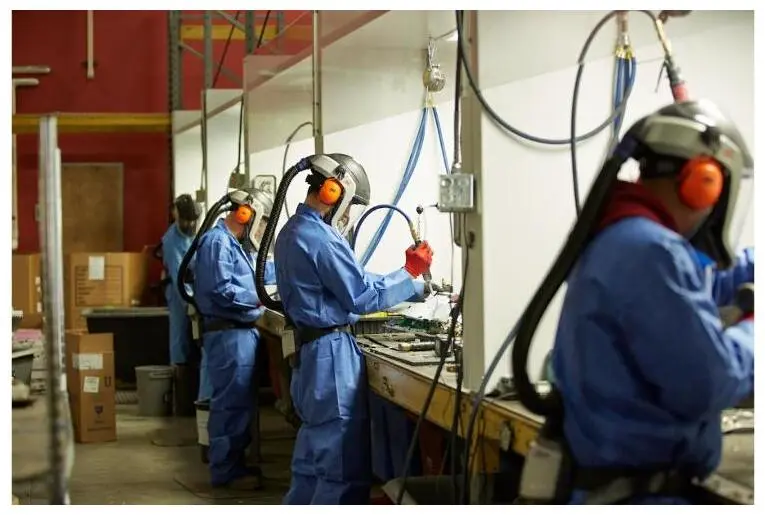
Full Circle Electronics holds both e-Stewards and R2v3 certifications alongside NAID AAA certification and operates specialized ITAR workflows with background-checked technicians. This combination addresses the full compliance stack for defense-sector organizations through a single provider relationship.
Multi-Country ITAD Programs in the U.S., Mexico and Colombia
Consistent compliance reporting across borders requires more than a single-country recycler with a foreign subcontractor. Asset movements between the U.S., Mexico and Colombia involve distinct regulatory environments, and chain-of-custody documentation must remain unbroken across all of them.
Full Circle Electronics operates certified facilities across eight U.S. states and maintains operations in Mexico and Colombia. All activity is tracked through a secure real-time customer portal that provides serialized asset records, certificates of destruction and audit-ready reports on demand. This infrastructure supports organizations that need a single accountable provider across a multi-country footprint while maintaining local service execution.
Contact us to see how Full Circle Electronics supports multi-country ITAD programs with consistent certification coverage.
Certification Choices for Circular-Economy and ESG Reporting
Both standards support reuse-first processing, but enforcement differs. R2v3 requires an environmental management hierarchy that prioritizes reuse, then recycling, with disposal as a last resort. e-Stewards incorporates this hierarchy and adds stricter hazardous material controls, including a zero-landfill mandate for CRT glass, mercury, lead and cadmium.
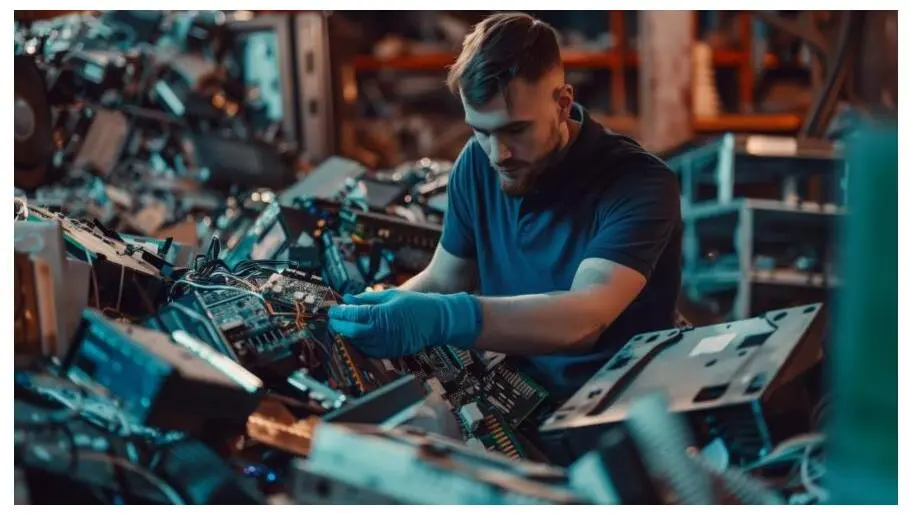
For sustainability officers building ESG disclosures, certification choice shapes which claims can be substantiated. e-Stewards’ stricter export and labor provisions provide a higher-assurance basis for supply-chain ethics reporting. R2v3’s broader adoption means procurement frameworks reference it more often, but it does not include the same absolute prohibitions.

Full Circle Electronics’ reuse-first model prioritizes testing and refurbishment before recycling. Refurbished equipment supports digital literacy programs and creates measurable social equity outcomes that sustainability officers can include in ESG reporting.
How Dual Certification Lowers Internal Audit and RFP Risk
Dual-certified ITAD providers eliminate certification-based objections in RFPs and reduce buyer risk exposure on chain-of-custody verification. An organization that specifies either e-Stewards or R2v3 in procurement requirements is satisfied automatically. An organization that requires both, which is increasingly common in enterprise and government RFPs, needs a provider that holds both simultaneously.
Dual certification also means independent audits against two distinct standard bodies, each with its own third-party audit requirements and surprise inspection protocols. This layered verification lowers the likelihood of undocumented downstream handling that could create liability for the asset owner.
Full Circle Electronics holds e-Stewards, R2v3 and NAID AAA certifications along with ISO 9001, ISO 14001 and ISO 45001. This certification stack satisfies a broad range of enterprise, healthcare, financial services and government procurement requirements without requiring buyers to manage multiple vendor relationships.

Vendor Checklist for e-Stewards and R2v3 Certified Recyclers
Vendor selection benefits from a structured checklist that aligns with e-Stewards and R2v3 requirements. The following points support that review.
- Confirm active certification status directly through the e-Stewards certified recycler directory and the SERI R2 certified facilities list, rather than relying on self-reported claims.
- Request documentation of downstream vendor audits, including the number of tiers covered and the most recent audit dates.
- Confirm whether the provider holds NAID AAA certification for data destruction and whether all technicians are background-checked.
- Determine whether the provider operates under ITAR-compliant workflows and whether those workflows are documented and auditable.
- Verify that chain-of-custody documentation is serialized at the asset level, not only at the shipment level.
- Confirm access to a real-time reporting portal with on-demand certificate retrieval and CSV export capability.
- For multi-country operations, confirm that certified facilities exist in each country where assets will be processed, not only in the country of origin.
- Clarify whether the provider performs destruction in-house or brokers work to third parties, since brokered destruction breaks the chain of custody.
- Request sample ESG reporting outputs to confirm alignment with the organization’s sustainability reporting framework.
Availability and Cost of Dual-Certified Providers
Dual-certified providers remain less common than single-certification recyclers. There are approximately 1,250 R2-certified facilities worldwide and at least 109 e-Stewards-certified facilities in the United States. This gap reflects the additional audit burden and operational requirements that e-Stewards imposes. Providers that hold both certifications represent a smaller subset within that group.
Organizations sometimes view dual certification as added cost without proportional benefit, but risk analysis tells a different story. A single downstream handling failure can create consequences that exceed the cost difference between certified and uncertified providers. Dual certification functions as a risk-management investment rather than a premium service tier.
For organizations operating across the U.S., Mexico and Colombia, access to a single dual-certified provider with facilities in all three countries removes coordination overhead. It also reduces documentation gaps that arise when separate regional vendors manage different parts of the asset lifecycle.
Next Steps for Internal Risk Assessment and RFP Planning
Internal risk assessment creates a foundation for effective RFPs and vendor selection. The following sequence helps connect asset profiles, regulations and certification needs.
- Inventory all asset categories subject to disposition, noting which contain ITAR-controlled components, PHI, PII or other regulated data. This inventory establishes the baseline for regulatory analysis.
- Identify applicable regulatory frameworks such as HIPAA, ITAR, SOX, GDPR and state e-waste laws, and confirm which certification standard each framework references or requires. This mapping shows whether e-Stewards, R2v3 or both are necessary.
- Review existing ESG reporting commitments and determine whether supply-chain labor standards or export prohibitions are explicitly addressed. This review clarifies which certification provisions support current disclosures.
- Verify current certification status of any existing recycling vendors using official SERI and e-Stewards directories before renewing contracts. This verification confirms that partners still meet stated requirements.
- Draft RFP questions that require vendors to document downstream audit depth, export policy, NAID AAA status, ITAR workflow availability and real-time reporting capabilities. These questions translate risk priorities into procurement language.
- Request references from clients in the same industry and regulatory environment to validate operational performance, not only certification status. These references provide evidence of real-world execution.
Contact us to schedule a consultation and receive a vendor-evaluation checklist tailored to e-Stewards and R2v3 compliance requirements.
Conclusion: Matching Certifications to Compliance and ESG Priorities
The choice between e-Stewards and R2v3 depends on how each standard’s provisions align with specific obligations. Export prohibitions, downstream audit depth, labor restrictions and ISO certification requirements should match regulatory requirements, ESG commitments and risk tolerance.
Organizations that require the highest assurance across these dimensions often select providers that hold both certifications. Full Circle Electronics holds e-Stewards, R2v3 and NAID AAA certifications, operates certified facilities across the U.S., Mexico and Colombia and provides ITAR-compliant workflows with real-time chain-of-custody tracking through a secure customer portal. With more than 20 years of experience serving enterprises, government agencies and healthcare systems, Full Circle Electronics is positioned to meet the full range of compliance requirements that IT, security, sustainability and procurement leaders face today.