

Last updated: July 30, 2026
Key Takeaways
- Retail drop-off services prioritize convenience over compliance and lack serialized tracking, chain-of-custody documentation and audit-ready destruction certificates.
- Certified destruction follows NIST 800-88, tracks each serial number and uses a five-stage process that produces records for audit files.
- Professional ITAD programs provide secure collection, NIST-aligned sanitization or destruction, responsible recycling and portal-based reporting at scale.
- Validation signals such as NAID AAA, R2v3, e-Stewards and ISO certifications, plus in-house destruction and background-checked staff, distinguish reputable providers.
- Full Circle Electronics delivers certified, serialized hard drive destruction across multiple locations; contact us to build a compliant program for any organization.
What Secure Hard Drive Destruction Involves
NIST Special Publication 800-88 Revision 2 is the current U.S. federal standard for media sanitization and serves as the benchmark for HIPAA, PCI DSS, GLBA, FACTA and CMMC. It defines three sanitization levels: Clear, Purge and Destroy. Physical destruction through shredding, crushing or disintegration aligns with the Destroy level and applies to the most sensitive data.
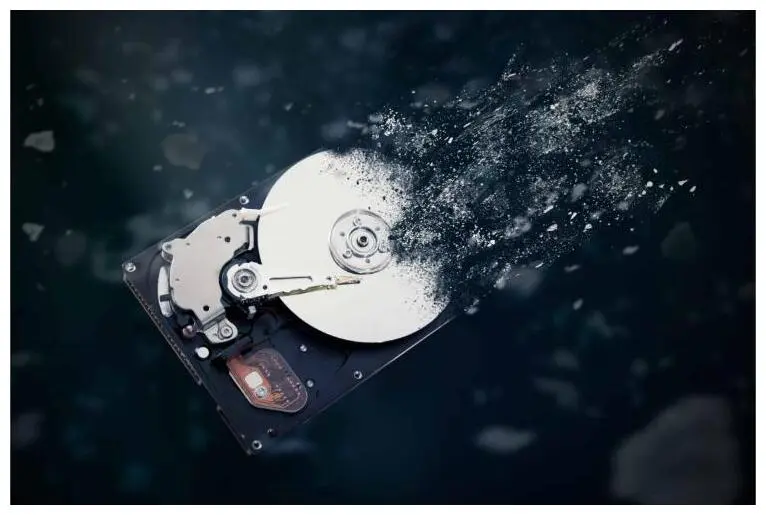
Certified destruction extends beyond the physical act. A defensible hard drive destruction process follows five stages: collection, chain of custody, serialization, destruction and reporting, with each stage producing records that form the audit file. These records connect specific devices to documented destruction events.
A compliant Certificate of Destruction must include five core elements that together create an auditable link between specific assets and verified destruction:
- Each drive listed by individual serial number
- The destruction method applied and the applicable NIST category
- The exact date and location of destruction
- The certifying organization name and an authorized signature
- A unique certificate reference number
Non-serialized or bulk destruction certificates listing items generically, such as “100 hard drives,” do not create an auditable link between specific assets and their destruction and leave organizations exposed to liability after a data breach.
SSDs require particular attention. Degaussing does not work on solid-state drives because SSDs use flash memory chips rather than magnetic storage, so physical shredding provides the only method that eliminates data on SSDs.
Full Circle Electronics provides certified NIST 800-88 and DoD 5220.22-M compliant destruction for all media types and issues serialized certificates for every engagement. Contact us to discuss a destruction program aligned with specific compliance requirements.
Why Certified ITAD Beats Retail Drop-Off Services
Retail drop-off services at office supply stores and big-box retailers offer convenience but lack serialized tracking, chain-of-custody documentation and audit-ready certificates that compliance frameworks require. Certified IT asset disposition programs address these gaps by covering the full lifecycle of each data-bearing device.
A professional ITAD program manages secure collection, serialized inventory at pickup, NIST-aligned data sanitization or physical destruction, responsible recycling or remarketing and transparent reporting through a client portal. Each step produces records that support audits and internal reviews.
On-site destruction occurs at the client premises with mobile shredding equipment, removes transit exposure and allows staff to witness the process in real time, while off-site destruction uses sealed, GPS-tracked transport to a certified facility and often reduces cost for large volumes. Both models meet certified standards when controlled, documented workflows guide each step.

Scalability defines professional programs. Full Circle Electronics serves single-location small businesses and Fortune 1000 enterprises with multi-site footprints across the United States, Mexico and Colombia. The same certified workflow, including on-site de-racking, serialized asset reconciliation, NIST-compliant destruction and portal-based reporting, applies regardless of volume or geography.
For remote and satellite offices, the Full Circle Electronics Box Program ships packaging materials and prepaid labels directly to each location. Assets are tracked inbound and outbound through the client web portal and processed under the same certified destruction standards as on-site engagements.
Validation Signals That Indicate a Trusted Provider
Strong validation signals show that a provider maintains both technical capability and operational accountability throughout the destruction process. NAID AAA certification requires hard drives to be shredded to particle sizes that make data recovery technically impossible and mandates witnessed destruction, photographic evidence, serial number verification and certificates documenting the full chain of custody. It also involves unannounced third-party inspections that evaluate physical security, employee background checks, equipment calibration and documentation accuracy.

Buyers evaluating any provider should confirm the following signals, which together show that the provider maintains certified processes and audit-ready documentation:
- NAID AAA certification for data destruction processes
- R2v3 or e-Stewards certification for responsible recycling
- ISO 9001, ISO 14001 and ISO 45001 for quality, environmental and safety management
- Background checks for all personnel, as required by NAID AAA
- Serialized, per-device tracking from collection through final disposition
- Real-time client portal access to certificates, shipment records and audit reports
- In-house destruction, not brokered to a third party, to maintain an unbroken chain of custody
An ITAD vendor’s R2v3 certification does not extend to subcontractor operations when drives move to third parties for destruction, which creates a compliance and chain-of-custody gap that auditors identify during reviews. Full Circle Electronics performs destruction in-house across its certified facility network and removes that gap.
How Professional Services Solve Common Pain Points
Each common concern about hard drive disposition connects directly to a structural feature of a certified ITAD program.
Data exposure risk. Every retired hard drive contains sensitive information that remains recoverable until the drive is securely erased or physically destroyed, even after file deletion or reformatting. Because recovery tools can access data from any intact storage medium, certified physical destruction eliminates that risk by rendering the device permanently nonfunctional at the device level.
Regulatory compliance. A Certificate of Destruction supports regulatory compliance with data protection laws including GDPR, CCPA, GLBA, the FTC Safeguards Rule and the HIPAA HITECH Security Rule when decommissioning, repurposing, donating or disposing of devices containing sensitive data. Full Circle Electronics issues serialized certificates for every engagement, accessible on demand through its client portal.
Environmental responsibility. Full Circle Electronics holds e-Stewards and R2v3 certifications, which ensure that materials recovered from destroyed drives move through environmentally responsible channels. A reuse-first model prioritizes refurbishment before recycling and supports circular-economy outcomes for clients with ESG commitments.

Operational simplicity. White-glove decommissioning that includes on-site de-racking, serialized inventory and logistics coordination removes the burden from internal teams. Full Circle Electronics operates standardized workflows across its U.S. and Latin American network with minimal disruption to daily operations.
Cost transparency. Transparent revenue-sharing models allow procurement and finance leaders to see how much value asset remarketing recovered and how that value offsets new technology investments.
Comparing In-House, Retail and Professional Destruction Options
Organizations typically consider four approaches when retiring data-bearing hardware.
In-house handling keeps destruction internal but produces only internal log files rather than formal audit-grade proof. Consumer-grade and many enterprise wiping tools do not address all storage areas on SSDs and can leave data remnants recoverable by sophisticated third-party recovery services. In-house processes also leave all liability with the organization if data is later recovered.
General recyclers and e-waste collection points do not focus on data security or chain-of-custody protocols. Data-bearing devices should not move to generic recyclers or scrap processors because those services increase risk when drives enter those streams before proper sanitization.
Brokers introduce a subcontractor layer that breaks the chain of custody. This matters because when a primary vendor ships drives to a third party for final destruction, the primary vendor certifications do not extend to that downstream operation and leave the destruction phase unverified.
Certified full-service ITAD providers such as Full Circle Electronics deliver the full-lifecycle coverage described earlier while performing destruction in-house under NAID AAA-certified processes. They also support value recovery through asset remarketing and turn retired hardware into a financial offset rather than a pure disposal cost.
Organizations ready to move from a fragmented approach to a certified program can contact us to request a quote tailored to the asset mix and compliance requirements.
Due-Diligence Checklist for Selecting a Provider
Before engaging any hard drive destruction service, ask the following questions to verify that the provider maintains an unbroken chain of custody, performs destruction in-house under certified processes and produces audit-ready documentation:
- Which certifications does the facility hold, and are they current? Request documentation for NAID AAA, R2v3, e-Stewards and relevant ISO standards.
- Does the provider perform destruction in-house, or does it broker to a subcontractor?
- How is chain of custody documented from the moment assets leave the client facility through final destruction?
- Does the Certificate of Destruction list each device by individual serial number, or does it use bulk counts?
- Are all personnel background-checked, and is that screening required by the provider certifications?
- Which NIST 800-88 sanitization category applies to each device type in the asset mix, including SSDs and NVMe drives?
- Is witnessed or on-site destruction available for the most sensitive media?
- How are certificates and audit reports accessed after the engagement?
- Does the provider carry insurance and assume liability for proper destruction methods?
- Can the program scale across multiple sites or international locations under a single chain of custody?
Frequently Asked Questions
What is the difference between data wiping and physical hard drive destruction?
Data wiping uses software to overwrite stored data and suits drives prepared for reuse when performed to NIST 800-88 standards. Physical destruction through shredding, crushing or disintegration renders the drive permanently nonfunctional and applies to the most sensitive data or to drives that cannot be reliably wiped, such as damaged drives or SSDs with wear-leveling limits. A certified ITAD program selects the method based on device type, data sensitivity and intended outcome and documents the choice in a serialized Certificate of Destruction or Certificate of Erasure.
What certifications should a hard drive destruction provider hold?
The most recognized certifications for data destruction are those outlined in the validation signals section above: NAID AAA for destruction processes, R2v3 or e-Stewards for recycling practices and ISO standards for quality and safety management. Providers serving regulated industries should also demonstrate alignment with HIPAA, PCI-DSS, GDPR and other applicable frameworks. Full Circle Electronics holds NAID AAA, R2v3 or e-Stewards, ISO 9001, ISO 14001 and ISO 45001 certifications, which vary by facility.
What does a compliant Certificate of Destruction include?
A compliant Certificate of Destruction must include the five elements detailed earlier: per-device serial numbers, destruction method with NIST category, date and location, certifying organization and authorized signature with reference number. Generic certificates that list only a batch count without per-device serial numbers do not satisfy auditor requirements under HIPAA, GDPR, SOX or FACTA. Full Circle Electronics issues serialized certificates for every engagement, available on demand through its secure client portal.
Can Full Circle Electronics handle destruction across multiple locations or internationally?
Full Circle Electronics operates certified facilities across multiple U.S. states and maintains operations in Mexico and Colombia. Standardized workflows, centralized portal reporting and coordinated logistics support consistent destruction programs across multi-site and cross-border footprints. The Box Program extends that coverage to remote and satellite offices by shipping packaging materials and prepaid labels directly to those locations, with full inbound and outbound tracking through the client portal.
Is on-site or off-site destruction the right choice for a small business?
The right choice depends on data sensitivity, volume and internal policy. On-site destruction removes transit risk and allows staff to witness the process in real time, which suits highly regulated data or policies that require drives to remain on premises until destroyed. Off-site destruction at a certified facility often works better for smaller volumes or routine refreshes when the provider maintains a documented chain of custody with serialized tracking, sealed transport and GPS-monitored vehicles. Full Circle Electronics offers both models and recommends an approach based on the asset mix and applicable compliance requirements.
When Professional ITAD Services Make the Most Sense
Certified ITAD services fit any scenario where data-bearing hardware leaves organizational control. That threshold covers a single retired laptop, a full data center decommission and every situation between those points.
Retail drop-off services and generic recyclers do not provide the accountability infrastructure that regulators, auditors and insurers require, including the serialized tracking and chain-of-custody documentation discussed earlier. A poll found that most IT managers consider destruction certificates validated by strong chain of custody a key factor when choosing an ITAD vendor. The market has moved toward accountability, and convenience-based services have not kept pace.
Full Circle Electronics brings more than 20 years of certified ITAD experience, a NAID AAA-certified destruction process, in-house shredding across a national and international facility network and real-time portal reporting to every engagement. From a single drive to a multi-site decommission, the same rigorous chain of custody applies.
Contact us to schedule a consultation and receive a tailored quote for certified hard drive destruction services.