

Key Takeaways
-
Decommissioned telecom equipment stores sensitive configuration data and hazardous materials, which creates data security and environmental liabilities that require specialized handling.
-
Telecom recyclers should hold R2v3, e-Stewards, NAID AAA and ISO certifications together, with NIST 800-88 compliant data destruction methods for embedded flash and SSDs.
-
Chain-of-custody documentation, serialized Certificates of Destruction and clear value-recovery reporting support audits and regulatory compliance.
-
Enterprise-grade networking gear can recover 15–30% of original value when sanitized and remarketed. Certified providers must separate sold assets from recycled ones.
What Telecom E-Waste Recycling Services Provide
Telecom e-waste recycling services manage secure collection, data destruction and environmentally responsible processing of decommissioned telecom equipment such as routers, switches, PBX systems, servers and related network hardware.

These services differ from general e-waste recycling in two critical ways. Telecom gear stores sensitive data on embedded flash memory, configuration files and call logs. It also contains hazardous materials such as lithium batteries, lead-based circuit boards, mercury and cadmium that require specialized handling under federal and state environmental law. A specialized recycler is equipped to address both dimensions simultaneously.
Why Telecom Equipment Requires Specialized Handling
Telecom equipment poses dual risks: data security exposure and environmental impact. Both risks require coordinated controls across destruction, logistics and documentation.
Data security risks are significant. Enterprise networking equipment such as routers, switches and firewalls stores configuration files that reveal network security architecture, including VLAN assignments, access control lists, RADIUS/TACACS+ shared secrets, SNMP community strings, VPN pre-shared keys and certificate stores. A configuration reset is insufficient. Residual flash contents can persist after a reset, including cached credentials and keys.
Hazardous materials require proper management. Telecom equipment contains lead, mercury, cadmium and lithium batteries. Under the Resource Conservation and Recovery Act (RCRA), businesses must make a hazardous-waste determination before discarding electronics and manage the material under applicable standards. Civil penalties exceed $80,000 per violation per day at the statutory maximum.
Regulatory exposure is broad. HIPAA, GDPR, state e-waste laws and ITAR for defense-related equipment can apply depending on the organization and the data involved. As of 2025, 25 U.S. states plus the District of Columbia operate their own electronic-waste recycling laws and landfill disposal bans. Improper disposal can trigger breach notification obligations and significant fines.
Operational complexity demands planning. Large-scale decommissioning of data center or central office equipment requires logistics coordination, minimal downtime and white-glove service. Fragmented vendors and ad hoc processes create gaps in chain-of-custody documentation that auditors will identify. A specialized telecom recycler coordinates these elements under one program.

Key Certifications To Prioritize in a Telecom Recycler
Certifications verify a recycler’s credibility and support compliance for regulated industries. A telecom recycler should hold these certifications simultaneously to provide comprehensive coverage.
-
R2v3 (Responsible Recycling): The latest global standard in electronics recycling, R2v3 requires an Environmental, Health and Safety Management System, data sanitization aligned to NIST 800-88 and downstream due diligence across the entire recycling chain. Certification applies to individual facilities, so each location must be independently audited.
-
e-Stewards: Recognized by the U.S. Environmental Protection Agency as one of two accredited certification standards for electronics recyclers, e-Stewards ensures responsible recycling and prohibits exporting hazardous e-waste to developing countries.
-
NAID AAA: Issued by i-SIGMA and validated through scheduled and unannounced audits, NAID AAA validates operational controls around collection, transport, storage and destruction of data-bearing assets, including employee background checks, chain-of-custody documentation and monitored destruction methods.
-
ISO 9001, ISO 14001 and ISO 45001: These standards demonstrate quality management, environmental management and occupational health and safety management respectively, which form the foundation of an enterprise-grade recycling operation.
Data Destruction Methods for Telecom Hardware
Destruction methods must match the media type. The wrong method leaves data recoverable and creates a false sense of security.
Software-based wiping (NIST 800-88 compliant) overwrites user-addressable storage and suits functional drives intended for reuse. Certified software wiping costs in the range of $5–$20 per unit and meets NIST 800-88 Clear or Purge levels for HDDs. It is the only method that preserves hardware value for remarketing.
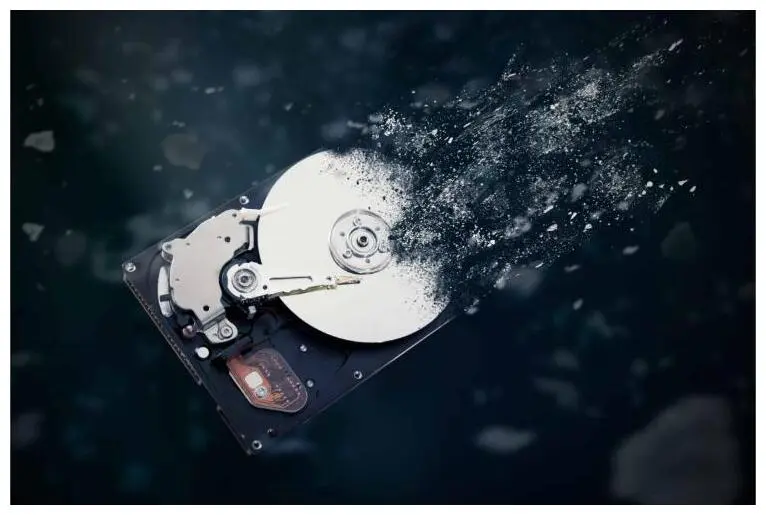
Degaussing applies a powerful electromagnetic pulse to scramble magnetic domains. Degaussing is effective only on magnetic storage such as HDDs and LTO tape and has no effect on SSDs, USB flash or NVMe drives. Applying degaussing to an SSD leaves data intact while making the drive appear processed. It should not serve as a standalone method for modern telecom hardware.
Physical destruction (shredding, crushing) is required for SSDs and embedded flash in routers, switches and firewalls. NIST 800-88 compliant physical destruction shreds drives into particles no larger than 2mm and is the only reliable way to render data unrecoverable. Physical destruction costs in the range of $4–$40 per unit and achieves the NIST 800-88 Destroy level.
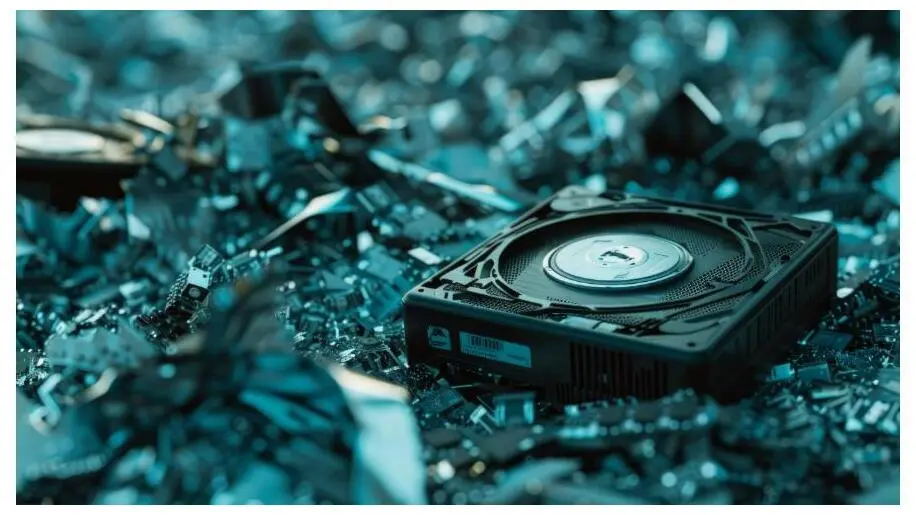
Telecom hardware often requires physical destruction because configuration data resides in embedded flash that cannot be reliably overwritten. Beyond Surplus advises: “If a switch, PBX, or firewall was ever configured for production, treat it as a data-bearing asset until proven otherwise.”
Every destruction engagement should produce serialized Certificates of Destruction. Per-device documentation records the serial number, destruction method, date and certifying technician. A serialized Certificate of Destruction is the practical control that holds up in an audit. Once data is securely destroyed, equipment can be evaluated for resale and value recovery.
Value Recovery From Retired Telecom Equipment
Enterprise-grade networking gear aged 3–5 years can recover 15–30% of original purchase price when properly sanitized and remarketed. Certified NIST 800-88 sanitization can increase resale prices further. A reputable recycler evaluates equipment for reuse, refurbishes it and shares revenue transparently.

Even non-functional equipment yields value through scrap recycling and spare parts harvesting. A 2025 IDC ITAD study found that 40% of telecom equipment retains 20–50% of its resale value if remarketed properly.
Transparent reporting supports finance and compliance teams. Organizations should receive clear documentation of what was sold versus recycled, which allows verification of value recovery against the original asset manifest. A vendor’s verbal assurance is insufficient. The document trail transfers liability.
How To Choose a Telecom E-Waste Recycler: A Seven-Step Checklist
This seven-step checklist supports consistent evaluation of telecom e-waste recycling services.
-
Verify certifications. Confirm R2v3, e-Stewards, NAID AAA and ISO certifications are current and facility-specific. Request the certificate number and expiration date for each location that will handle the equipment.
-
Ask about data destruction methods. Ensure NIST 800-88 compliant wiping is available for reusable drives and that physical destruction is used for SSDs and embedded flash. Confirm the particle size achieved for shredded media.
-
Review chain-of-custody procedures. Request sample Certificates of Destruction and confirm serialized tracking from pickup through final disposition. If a serial number cannot be matched to a disposition outcome, the disposal program is not defensible.
-
Inquire about value recovery options. Ask about remarketing, revenue-sharing models and spare parts harvesting. Confirm that reporting separates sold assets from recycled ones.
-
Assess logistics capabilities. Confirm the provider handles multi-site or international operations with white-glove decommissioning, including on-site de-racking and serialized inventorying.
-
Check references and case studies. Request examples in the telecom sector. A provider with telecom-specific experience understands the data risks unique to network hardware.
-
Confirm regulatory compliance. Verify state e-waste law compliance across all disposal locations and ITAR readiness if the equipment includes defense-related hardware.
Full Circle Electronics meets every criterion on this checklist. Discuss telecom decommissioning needs with the team to plan a secure project.
Regulatory Considerations for Telecom E-Waste Disposal
As of 2025, 25 U.S. states plus the District of Columbia operate their own electronic-waste recycling laws and landfill disposal bans, with no single federal recycling mandate. RCRA governs hazardous materials at the federal level. The Basel Convention regulates international e-waste shipments, restricting export of hazardous materials to non-OECD countries without prior informed consent.
Telecom companies may also face FCC rules on equipment disposal and, for defense-related hardware, ITAR requirements that mandate controlled destruction workflows and restricted facility access. HIPAA applies wherever telecom systems processed or stored protected health information.
Using a certified recycler demonstrates due diligence and reduces legal liability. A generator can remain liable under RCRA for improper downstream handling of its hazardous waste, so documentation from the recycler serves as the evidence that transfers responsibility.
Frequently Asked Questions
What Types of Telecom Equipment Can Be Recycled?
Routers, switches, PBX systems, servers, firewalls, IP phones, gateways, conference units and related network hardware are all candidates for certified telecom e-waste recycling. All data-bearing components, including embedded flash, onboard drives and voicemail storage, must be sanitized or physically destroyed before the equipment leaves custody. Passive gear such as cabling and patch panels does not carry data risk but still requires proper recycling to comply with landfill bans and hazardous material rules.
How Is Data Destroyed on Routers and Switches?
Configuration data on routers and switches resides in embedded flash and NVRAM. Flash memory cannot be reliably overwritten using standard software tools, and degaussing has no effect on it. NIST SP 800-88 favors physical destruction for flash-based storage. Shredding to a particle size of 2mm or smaller is required. Higher-end firewalls may also include onboard HDDs or SSDs for logging, which require destruction matched to their media type. A factory reset does not replace documented sanitization, because residual data including cached credentials and keys can persist after a reset.
Can Organizations Recover Value From Retired Telecom Equipment?
Enterprise-grade networking gear aged 3–5 years can recover a meaningful percentage of original purchase price when properly sanitized and remarketed through a certified ITAD provider, as noted earlier. Even non-functional equipment yields value through spare parts harvesting and scrap recycling of materials such as copper and precious metals from circuit boards. The key requirement is a recycler that provides transparent reporting on what was sold versus recycled, so finance teams can verify the actual return against the asset manifest.
What Regulations Apply to Telecom E-Waste Disposal?
Federal regulation reaches telecom e-waste through RCRA, which requires hazardous-waste determinations and proper management of materials containing lead, mercury or cadmium. As mentioned earlier, 25 states plus the District of Columbia have their own e-waste laws that impose landfill bans and recycling mandates. The Basel Convention governs international shipments of hazardous e-waste. Industry-specific rules include HIPAA for equipment that processed protected health information, ITAR for defense-related hardware and FCC rules on equipment disposal. Organizations operating across multiple states must map both their sales footprint and their disposal locations to align with every applicable standard.
Why Full Circle Electronics Is the Recommended Choice
Full Circle Electronics holds R2v3, e-Stewards, NAID AAA, ISO 9001, ISO 14001 and ISO 45001 certifications simultaneously. Every employee is background-checked as required by NAID AAA certification.
White-glove service includes on-site de-racking, de-stacking and serialized inventorying, so client staff avoid the physical labor and tracking of retired assets. Facilities span eight U.S. states: Arizona, Northern and Southern California, Colorado, Florida, Georgia, Illinois and Texas, plus operations in Mexico and Colombia. This footprint supports multi-site and international decommissioning under a single accountable provider.
A secure customer portal provides real-time tracking of every shipment and asset, with certificates of destruction, erasure and recycling available on demand. Transparent revenue-sharing models give finance teams clear visibility into what was sold versus recycled. The reuse-first model prioritizes refurbishment and remarketing, which supports circular economy outcomes before recycling.
Organizations planning telecom equipment retirement can start a secure decommissioning project with Full Circle Electronics.
Conclusion
Decommissioned telecom equipment carries two distinct risks: sensitive data stored in embedded flash and hazardous materials that trigger environmental liability. Addressing both requires a certified recycler with the right credentials, documented destruction methods and transparent reporting.
Full Circle Electronics meets every criterion in the checklist above, including certifications, NIST 800-88 compliant data destruction, white-glove logistics, value recovery and audit-ready documentation across a national and international footprint. Retiring telecom equipment responsibly helps avoid liability and supports sustainability goals. Organizations can schedule a consultation with Full Circle Electronics to plan a secure decommissioning project.