

Key Takeaways
- Onsite hard drive shredding destroys media at the client site using NIST SP 800-88 Destroy-level methods and removes transport chain-of-custody risk.
- SSDs and NVMe drives cannot be degaussed and require physical shredding or cryptographic erase, so vendors must match method to media.
- Buyers verify NAID AAA certification, background-checked technicians, serialized asset reporting, witnessed destruction options and detailed Certificates of Destruction before booking.
- A compliant Certificate of Destruction lists every serial number, destruction method, NIST reference, date, location, technician, witness and chain-of-custody details.
- Full Circle Electronics delivers certified onsite shredding and data destruction services with audit-ready documentation. Schedule an onsite destruction assessment and protect sensitive data.
How Onsite Hard Drive Destruction Protects Chain Of Custody
The term onsite covers several service models with different risk profiles. A mobile shredding truck parked at the curb is technically onsite. A background-checked technician operating a shredder inside a server room is also onsite. The two models differ in chain-of-custody control and witness access.

Witnessed hard drive destruction places a client representative at the destruction point. The witness observes each drive move from the staging pallet into the shredder and signs the Certificate of Destruction. Onsite destruction keeps media readable only under client control, closing the transport risk window.
Full Circle Electronics performs destruction in-house for products delivered to its facilities and does not resell inventory to third-party recyclers. Certain data-containing materials such as small electronics, media cards, tapes and embedded-storage devices may go to vetted downstream service providers. Onsite services include NIST-compliant wiping and physical shredding at the customer location by background-checked professionals. This single, documented chain of custody distinguishes an in-house provider from a connector network that dispatches subcontractors.

Request an onsite destruction quote and align service scope with internal policies.
Matching Destruction Methods To HDD, SSD, And NVMe Media
Traditional spinning hard drives can be degaussed, wiped, crushed or shredded. SSDs and NVMe drives cannot be degaussed and instead require physical shredding or cryptographic erase. This media distinction drives method selection and often exposes gaps in vendor capabilities.
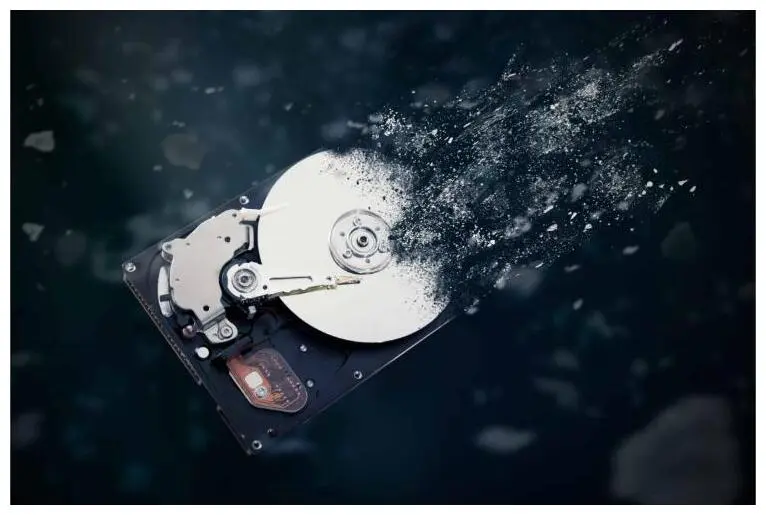
Solid-state media stores data as electrical charge in NAND flash memory cells rather than as a magnetic pattern on spinning platters. Degaussing does not affect solid-state drives because no magnetic pattern exists to scramble. Applying a degausser to an SSD can create a drive that looks damaged while data remains recoverable.
Wear-leveling further complicates SSD sanitization. SSD controllers remap writes across NAND cells, so overwrite passes cannot guarantee contact with every physical cell that holds residual data. NIST SP 800-88 Rev. 2 treats cryptographic erase as a purge technique and physical destruction as a destroy technique for solid-state media and directs users to IEEE 2883 for media-specific methods.
Some vendors advertise hard drive shredding but only crush or wipe drives. Buyers confirm the actual method applied to solid-state media before booking. Full Circle Electronics aligns data destruction with NIST 800-88 and DoD 5220.22-M standards and applies software-based wiping, degaussing, crushing and shredding matched to media type, with Certificates of Destruction for every engagement. Because method selection varies by media, buyers benefit from a clear verification framework that confirms the right method for each drive.
Verification Checklist For Onsite Hard Drive Shredding Providers
A marketing page does not confirm compliance. This checklist focuses on evidence that separates a certified in-house provider from a broker or connector network.
- NAID AAA Certification: NAID AAA, administered by i-SIGMA, requires unannounced audits and documented chain-of-custody procedures for every job. Verify the certificate number in the i-SIGMA member directory and confirm the certified location matches the site performing the work.
- Background-Checked Technicians: NAID AAA certification requires criminal background screening, drug testing and identity verification for employees with access to sensitive materials. Confirm that every technician dispatched to the site meets this standard.
- Serialized Asset-Level Reporting: Bulk receipts listing only a drive count fail audits. A certificate that states “42 hard drives destroyed” proves quantity but not identity. Auditors trace specific serial numbers to destruction events, so require per-serial documentation.
- Witnessed Destruction Availability: Confirm the provider supports client witnesses and records the witness name on the Certificate of Destruction.
- Certificate Of Destruction Contents: Review a sample certificate before booking. Missing serial numbers, standard references or destruction methods signal weak documentation on live jobs.
- Insurance And Liability Coverage: Confirm that the provider carries appropriate liability insurance and will supply certificates of insurance on request.
- In-House Vs. Brokered Destruction: The party that performs destruction and holds chain of custody must issue the Certificate of Destruction. Broker-issued certificates for subcontracted work carry limited evidentiary value.
Certificate Of Destruction Requirements For Hard Drives
No single law names the Certificate of Destruction document, but HIPAA, GLBA, FACTA and similar rules require proof of secure disposal, and a serialized certificate serves as the standard evidence. Auditors look for a specific set of fields on every certificate, and missing items weaken audit defensibility.
- Asset IDs and serial numbers for every destroyed device, not a bulk count
- Destruction method used (shred, crush, degauss or cryptographic erase) and equipment identification
- NIST SP 800-88 standard reference with Destroy or Purge category
- Date and location of destruction
- Name of the technician who performed the destruction
- Name of the witness where witnessed destruction was elected
- Chain-of-custody reference that links the certificate to the custody log
- Authorized signature from a representative of the destruction provider
- Name, address and contact information of the certifying facility
HIPAA requires Certificates of Destruction and related records to be retained for at least six years under 45 CFR 164.530(j). The FACTA Disposal Rule treats contracting with a certified disposal service that provides a certificate as an explicitly compliant approach. PCI-DSS v4.0 Requirement 9.4.7 mandates secure destruction of cardholder data media. SOX requires documented end-of-retention disposal. A properly itemized certificate addresses all four frameworks.
Full Circle Electronics issues Certificates of Destruction, Erasure and Recycling at the end of the data destruction process. Certificates remain accessible through a secure customer web portal that offers 24/7 reporting and a certificate repository for audits.
DIY Destruction Myths Compared To Certified Onsite Shredding
Common do-it-yourself methods appear convenient but fail compliance tests because they lack verifiable certificates, documented chain of custody and audit trails.
Magnets: Consumer magnets do not generate a field strong enough to sanitize a hard drive platter. Industrial degaussers still have no effect on SSDs or NVMe drives.
Water: Submerging a drive leaves data on platters or flash chips intact. Forensic recovery from water-damaged hard drives remains possible in many cases, although outcomes vary by damage level and expertise.
Drilling: A drill bit through a platter damages the drive but leaves portions of the magnetic surface intact. Magnetic Force Microscopy can recover data from relatively undamaged regions in laboratory settings, often as fragments or sectors.
Scratching: Surface scratches do not uniformly remove the magnetic layer. Data recovery from scratched drives remains documented and achievable, typically as partial recovery in a certified cleanroom.
Drive Wiping: A single verified overwrite pass satisfies the Clear method on modern magnetic media under NIST SP 800-88 Rev. 2 when documented per device. For SSDs, cryptographic erase or physical destruction provides the appropriate path. Every wipe must produce a per-device verification log to support audits.
Comparing Onsite Shredding, Onsite Wiping, And Offsite Destruction
Onsite shredding fits scenarios where unsanitized media must never leave the premises in a readable state. It also fits when a client witness is required by policy, contract or regulation, or when data classification such as PHI, ITAR-controlled hardware, cardholder data or classified CUI makes any transport window unacceptable. No universal regulation such as HIPAA mandates onsite destruction, so organizations base decisions on risk analysis, policy, contracts and classification. Onsite shredding removes transport risk because media is destroyed before departure and staff witness the event.
Onsite wiping suits functional, supported drives where data classification permits Purge-level sanitization and reuse or resale is authorized. Certified erasure keeps hardware reusable, preserves asset value and avoids the embodied carbon of replacement devices. Per NIST SP 800-88 Rev. 2, wiping does not suit SSDs without cryptographic erase, drives that fail verification or media designated destroy-only by policy.
Offsite destruction fits standard commercial volumes of non-regulated or standard-sensitivity equipment when risk assessments accept a documented transport window, sealed containers and GPS-tracked logistics. Regulated or highly sensitive data often requires onsite witnessed destruction. Offsite destruction usually costs less because providers process drives at their own facilities with existing equipment. Effective offsite programs rely on sealed containers, GPS-tracked transport, serial-level scanning at each transition and reconciliation reports that prove complete processing.
Full Circle Electronics delivers electronic data sanitization, factory reset and physical destruction under NIST 800-88 and supports onsite hard drive shredding and NIST-compliant data wiping. Clients select the mix that fits risk and value recovery goals. Mixed engagements that combine onsite shredding for high-sensitivity media with offsite processing for remaining assets create one custody record and one consolidated audit pack.
Discuss the right destruction mix for current media and compliance needs with a program specialist.
Cost Drivers For Onsite Hard Drive Shredding Services
Onsite hard drive shredding pricing follows a quote-based model. Providers such as Data Destruction Inc. quote per-drive rates that vary by destruction method, volume and witness mode. Understanding these levers supports internal budgeting and approvals.
Drive count often serves as the primary pricing lever for onsite shredding. Providers commonly require 50–100 drive minimums to justify truck deployment, and volume discounts often begin around 200 drives. Service type, travel and setup fees also influence total cost. Media type affects pricing because SSDs and NVMe drives require finer shredding than HDDs to sever flash memory packages, which changes throughput and method selection. Witnessed destruction adds documentation steps and scheduling coordination. Certificate turnaround expectations, such as same-day issuance versus next-business-day delivery, can also affect pricing.
NAID AAA certification increases provider operating costs but supports regulated industries by producing audit-defensible documentation and clear liability transfer.
Full Circle Electronics follows a quote-based, program-specific model that emphasizes speed to quote, pickup and value recovery. Pricing reflects asset mix, logistics and compliance requirements rather than fixed rate cards.
Why Organizations Choose Full Circle Electronics
Full Circle Electronics provides IT asset disposition and electronics recycling services with more than 20 years of combined experience across predecessor businesses. Clients include SMBs, Fortune 1000 enterprises, healthcare systems, government agencies and data centers.
Full Circle Electronics holds NAID AAA, R2v3, e-Stewards, ISO 9001, ISO 14001 and ISO 45001 certifications. Certifications apply to specific sites and are confirmed during program scoping. NAID AAA status confirms criminal background screening, drug screening and identity verification for employees with access to sensitive materials. Destruction for products delivered to Full Circle Electronics occurs in-house rather than through brokers, maintaining a documented chain of custody from de-rack through final disposition. Certain data-containing materials such as small electronics, media cards, tapes and embedded-storage devices may go to vetted downstream providers under controlled workflows.
Serialized tracking and audit-ready reporting flow through a secure 24/7 customer portal. Certificates of destruction, erasure and recycling remain accessible on demand and can be reissued when needed. Certified processes support HIPAA, PCI-DSS and NIST 800-88 compliance and include ITAR-controlled recycling workflows for defense and aerospace programs.
Certified processing facilities operate across Arizona, Northern and Southern California, Colorado, Georgia, Illinois and Texas, with international operations in Mexico and Colombia. Florida (Ocala) also operates as a certified e-Stewards and NAID AAA location. Standardized workflows, centralized reporting and coordinated logistics support consistent IT asset disposition across multi-site programs and produce audit-ready reporting for stakeholders.
Schedule a discovery call or submit a destruction program RFP to compare Full Circle Electronics with other providers.
Frequently Asked Questions
Does Degaussing Work On SSDs And NVMe Drives?
Degaussing does not work on SSDs or NVMe drives. Degaussing exposes magnetic storage media to a strong electromagnetic field that randomizes magnetic domains on platters. SSDs and NVMe drives store data as electrical charge in NAND flash cells rather than magnetic patterns. A degausser leaves flash memory unaffected. Applying degaussing to an SSD can create a drive that appears destroyed while data remains recoverable. As noted earlier, NIST SP 800-88 Rev. 2 treats cryptographic erase as a purge technique and physical destruction as a destroy technique for solid-state media. Vendors that list degaussing as an SSD destruction method without also offering physical shredding or cryptographic erase misalign method and media.
What Makes A Certificate Of Destruction Audit-Defensible?
An audit-defensible Certificate of Destruction lists every destroyed asset by serial number and asset tag rather than a bulk count. It identifies the destruction method, references the applicable NIST SP 800-88 r2 category (Destroy or Purge), states the date and location of destruction and names the technician. It includes witness attestation where elected, provides a chain-of-custody reference and carries an authorized provider signature. Many organizations also require a client or independent witness signature. HIPAA requires six-year retention of Certificates of Destruction, as noted earlier. PCI-DSS and SOX auditors rely on serialized, device-level Certificates of Destruction as primary disposal evidence, typically retained for at least seven years. Generic pickup invoices do not meet this standard.
When Is Onsite Shredding Preferable To Onsite Wiping Or Offsite Destruction?
Onsite shredding fits cases where unsanitized media must never leave premises in readable form, where client witnesses are required or where data classification makes any transport window unacceptable. No universal regulation such as HIPAA mandates onsite destruction, so organizations base choices on risk analysis, policy, contracts and classification. Onsite wiping fits functional, supported drives where Purge-level sanitization suffices and reuse or resale is allowed, provided verification confirms success. Per NIST SP 800-88 Rev. 2, onsite wiping does not suit SSDs without cryptographic erase or drives that fail verification. Offsite destruction fits standard commercial volumes of non-regulated or standard-sensitivity equipment when risk assessments accept sealed containers, GPS-tracked logistics and a documented transport window. Regulated or highly sensitive data often uses onsite witnessed destruction. Mixed engagements that combine onsite shredding for high-sensitivity media with offsite processing for remaining assets are common and produce consolidated audit documentation.
What Is NAID AAA Certification And Why Does It Matter?
NAID AAA certification, administered by i-SIGMA, is an information destruction certification that includes unannounced audits in addition to scheduled reviews. Certification applies per service type and per operational location, so status can vary by site. NAID AAA requirements include criminal background screening, initial drug screening and employment verification for Access Individuals, documented chain-of-custody procedures, physical security controls and destruction equipment that meets specified particle sizes. HHS guidance under HIPAA does not prescribe a specific disposal method or name NAID AAA as a requirement. Covered entities implement reasonable safeguards based on their circumstances. PCI DSS does not require destruction by a certified third party and does not recognize a specific “PCI certification” for destruction vendors. Certifications such as NAID AAA support due diligence but do not replace review of actual workflows and certificates. Buyers confirm NAID AAA status through the official i-SIGMA directory by company name and location.
How Does Full Circle Electronics Handle Mixed Media Lots With HDDs And SSDs?
Full Circle Electronics applies destruction methods matched to each media type within a single engagement. Under NIST SP 800-88 Rev. 2, magnetic hard drives can be sanitized via purge techniques such as degaussing or destroy techniques including disintegration, incineration, melting, pulverization and shredding. The choice depends on data classification and disposition path. Degaussing no longer functions as an approved destroy technique, and pulverize and shred techniques suit only the lowest security categories. SSDs and NVMe drives are sanitized via cryptographic erase on self-encrypting drives, controller-level block erase such as ATA Secure Erase or NVMe Sanitize, or physical shredding. Degaussing does not affect flash memory, and standard overwrite remains unreliable because of wear leveling and spare cells. Each device receives a serialized record that documents the method, technician, date and verification outcome. A compliance-grade Certificate of Destruction itemizes each destroyed asset by serial number, so auditors can confirm the status of specific devices. Clients with mixed lots do not need to sort media in advance because Full Circle Electronics manages IT assets of all types and conditions within one workflow and handles sorting and method selection as part of standard operations.