

Key Takeaways for Data Center Decommissioning
- Data center decommissioning carries significant risk, including data breaches, regulatory penalties and environmental liability when handled improperly.
- e-Stewards certification sets strict requirements for data destruction, chain-of-custody documentation and hazardous e-waste export compliance.
- Key evaluation criteria for certified ITAD providers include security compliance, unbroken chain of custody, sustainability practices, value recovery, logistics coverage and real-time reporting.
- e-Stewards applies tighter controls than R2 certification, especially for downstream vendor oversight and Basel Convention compliance on international shipments.
- Full Circle Electronics delivers e-Stewards certified data center recycling and ITAD services across the U.S., Mexico and Colombia, and provides fast, project-specific quotes.
How e-Stewards Certification Protects Data Center Operations
The e-Stewards program is an independent certification standard administered by the Basel Action Network. It defines clear requirements for data destruction, chain-of-custody documentation and the export of hazardous electronic waste. Certified recyclers apply data sanitization or physical destruction before any asset leaves a controlled facility. They also maintain an unbroken, auditable chain of custody from pickup through final disposition. Critically, e-Stewards requires compliance with the Basel Convention on hazardous waste exports, which reduces legal and reputational exposure for data center operators.
Executive Summary: Six Pillars for Evaluating Certified ITAD Partners
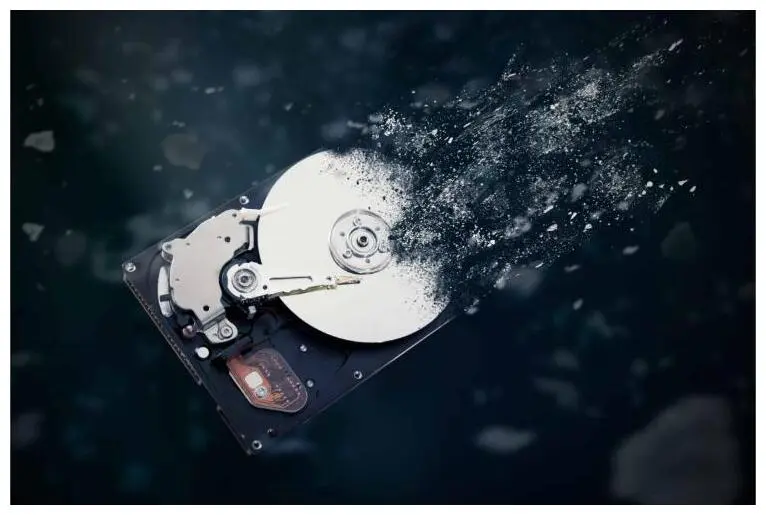
Selecting a certified ITAD partner requires evaluation of six core pillars. Each pillar maps to a distinct risk or operational requirement that data center, healthcare, financial services and government organizations face during decommissioning. The first two pillars address immediate risk around data protection and regulatory compliance, and the remaining four focus on operational performance and financial outcomes.
- Security and compliance: Certified data destruction aligned to NIST 800-88 and DoD 5220.22-M, with background-checked technicians and NAID AAA certification.
- Chain of custody: Serialized asset tracking from de-rack through final disposition, with no broker handoffs that break accountability.
- Sustainability and circularity: A reuse-first processing model that prioritizes refurbishment before recycling to support measurable circular outcomes.
- Value recovery: Transparent remarketing and revenue-sharing programs that offset decommissioning costs.
- Logistics footprint: Certified facilities and on-site service capability across all required geographies.
- Reporting visibility: Real-time portal access to certificates of destruction, shipment tracking and audit-ready documentation.
Full Circle Electronics addresses all six pillars through a single accountable provider relationship. Contact us to request a quote for e-Stewards certified data center recycling and ITAD services.
Comparing e-Stewards and R2 for Data Center Workflows
Both e-Stewards and R2 (Responsible Recycling) are recognized ITAD certification standards, and each brings a distinct focus that affects data center operations.
On reuse priorities, R2 requires a reuse-first hierarchy but permits a broader range of downstream outcomes. e-Stewards applies tighter rules on acceptable reuse and places stronger emphasis on downstream vendor oversight to confirm that materials are processed responsibly at every stage of the supply chain.
On international shipments, e-Stewards requires compliance with Basel Convention controls for exports of hazardous e-waste. R2 requires facilities to follow all applicable legal requirements for such exports. For organizations subject to ITAR, HIPAA or financial data regulations, the e-Stewards approach supports a strong compliance posture.
On downstream oversight, e-Stewards stresses auditing of downstream vendors to confirm responsible processing throughout the supply chain. This focus addresses situations where assets transfer to third parties after leaving the primary recycler facility.
Full Circle Electronics holds both e-Stewards and R2v3 certifications, along with NAID AAA, ISO 9001, ISO 14001 and ISO 45001, which provides broad compliance coverage for data center clients.
Core e-Stewards Requirements for Data Center Equipment
e-Stewards certification sets specific requirements across data security, environmental handling and traceability. The following standards apply directly to data center equipment processing.
- Data destruction must render all stored information unrecoverable before asset transfer or transport.
- Physical destruction methods, including shredding, crushing and degaussing, must meet documented standards such as NIST 800-88 or DoD 5220.22-M.
- Certificates of destruction or data erasure must be issued for every asset processed, with clear linkage to serialized records.
- Chain-of-custody documentation must be maintained from point of collection through final disposition.
- Hazardous materials, including batteries, CRTs and mercury-containing components, must be managed under approved environmental protocols.
- International shipments of hazardous e-waste must comply with applicable export and import requirements.
- Downstream vendors in the processing chain must undergo documented auditing and oversight.
- Worker health and safety standards must meet or exceed applicable regulations at every processing facility.
Data Center Decommissioning Workflows and Requirements
Data center decommissioning differs from standard office IT retirement in scale, asset density and security sensitivity. Racks, servers, storage arrays and networking equipment require physical de-racking before transport. High-density environments demand coordinated logistics to avoid operational disruption. Regulated industries often require on-site data destruction before assets leave the floor.

Full Circle Electronics supports both on-site and off-site decommissioning models. On-site services include white-glove de-rack and de-stack, serialized inventory at the point of removal and NIST-compliant data destruction performed by vetted personnel at the client location. Off-site processing supports assets that can be securely transported to a certified facility for destruction, refurbishment or recycling.
Multi-country execution follows the same certified workflow across Full Circle Electronics facilities in eight U.S. states, Mexico and Colombia. This consistency maintains a uniform chain-of-custody record regardless of asset origin.
Seven-Step Checklist for Certified Decommissioning Projects
The following checklist outlines practical steps for e-Stewards certified data center decommissioning.
- Conduct scope and inventory planning: Perform a pre-project asset audit to catalog all equipment by type, condition and data-bearing status before decommissioning.
- Vet the provider: Confirm the recycler holds active e-Stewards, R2v3 and NAID AAA certifications. Verify that technicians are background-checked and that destruction occurs in-house rather than through brokers.
- Execute white-glove de-rack and de-stack: Deploy trained technicians to remove equipment from racks and prepare assets for processing without disrupting active infrastructure.
- Capture serialized asset reconciliation: Record serial numbers and asset tags at the point of removal to establish an unbroken chain of custody from the data center floor forward.
- Carry out on-site data destruction: Perform compliant wiping, degaussing or physical shredding at the client location for all data-bearing media.
- Apply reuse-first processing: Route functional equipment through testing and refurbishment before recycling. Direct qualifying assets into transparent revenue-sharing programs to recover value.
- Access real-time reporting and certification: Use a secure online portal to obtain destruction certificates, shipment records and audit-ready reports on demand.
Selecting On-Site or Off-Site Decommissioning Models
On-site decommissioning fits situations where data sensitivity, regulatory requirements or asset volume make transport before destruction unacceptable. This model removes transit risk and enables immediate, witnessed destruction with same-day documentation. It serves as the standard approach for many healthcare, financial services, defense and government projects.
Off-site processing works well when assets are already sanitized, when volume and logistics favor consolidated transport or when refurbishment and remarketing represent the primary goals. Full Circle Electronics maintains certified processing facilities across eight U.S. states plus Mexico and Colombia, so off-site transport remains within a controlled, auditable chain of custody.
Many large-scale decommissioning projects combine both models. High-sensitivity media receives on-site destruction, while bulk hardware moves to off-site facilities for refurbishment or material recovery.
Coordinated Execution Across the U.S., Mexico and Colombia
Multi-country decommissioning introduces compliance complexity that fragmented vendor relationships often increase. Different jurisdictions maintain distinct e-waste regulations, data protection laws and environmental standards. A single provider with certified facilities in each country closes audit gaps that appear when assets cross borders between uncoordinated vendors.
Full Circle Electronics operates certified facilities in Arizona, Northern and Southern California, Colorado, Florida, Georgia, Illinois and Texas, with additional operations in Mexico and Colombia. All locations follow the same certified workflows, apply the same chain-of-custody documentation standards and connect to the same real-time client portal. This structure gives multinational organizations one point of accountability and a unified compliance record across every decommissioning project.
Finding Certified Recyclers for Regional and Global Needs
The e-Stewards certified recycler directory and the EPA certified electronics recyclers list provide starting points for identifying qualified providers in a region. For organizations operating across the U.S., Mexico and Colombia, Full Circle Electronics delivers certified coverage under a single contract and a single reporting framework.
To request a quote or discuss a decommissioning project, contact us directly. Full Circle Electronics prioritizes fast quote turnaround so organizations can move from assessment to execution without delay.
Frequently Asked Questions
What is e-Stewards certification and how does it support data centers?
e-Stewards is an independent certification standard that requires recyclers to meet strict requirements for data destruction, chain-of-custody documentation, downstream vendor auditing and compliance with regulations on hazardous e-waste exports. For data centers, it provides a verifiable compliance framework that reduces data breach risk, environmental liability and regulatory exposure. Working with an e-Stewards certified provider ensures that every asset is processed under audited, documented controls from pickup through final disposition.
How does Full Circle Electronics maintain chain of custody during large-scale decommissioning?
Full Circle Electronics performs serialized asset reconciliation at the point of removal, capturing serial numbers and asset tags before equipment leaves the data center floor. All assets are tracked through every stage of processing, including destruction, refurbishment or recycling, and records are accessible in real time through a secure client portal. Because Full Circle Electronics performs destruction in-house rather than brokering to third parties, the chain of custody remains unbroken throughout the entire process.
What data destruction standards does Full Circle Electronics follow?
Full Circle Electronics applies NIST 800-88 and DoD 5220.22-M compliant methods, including software-based wiping, degaussing, crushing and shredding. On-site destruction follows the same security protocols used across all projects and occurs at the client location. Certificates of destruction are issued for every asset processed, providing audit-ready documentation for HIPAA, PCI-DSS, SOX and other regulatory requirements.
Can Full Circle Electronics handle decommissioning projects in Mexico and Colombia?
Full Circle Electronics operates certified processing facilities in Mexico and Colombia in addition to its U.S. locations. All international operations follow the same certified workflows and chain-of-custody standards as domestic projects. Clients receive unified reporting across all geographies through a single portal, which reduces compliance gaps that can arise when multiple regional vendors are used.
How does the reuse-first model support ESG and value recovery goals?
Full Circle Electronics evaluates incoming assets for refurbishment and remarketing before routing equipment to recycling. Functional equipment is tested, refurbished and resold through transparent revenue-sharing programs that return value to the client. This reuse-first approach extends asset lifecycles, reduces raw material demand and generates measurable circular outcomes that support ESG reporting. For non-functional equipment, scrap recycling recovers raw materials responsibly under e-Stewards and R2v3 certified processes.

Conclusion: Moving Forward With Secure, Compliant Decommissioning
Certified data center decommissioning requires a provider that addresses all six evaluation pillars: security and compliance, chain of custody, sustainability and circularity, value recovery, logistics footprint and reporting visibility. e-Stewards certification serves as a baseline standard that confirms a recycler meets rigorous requirements across each of these areas.
Full Circle Electronics brings more than 20 years of ITAD experience and an e-Stewards, R2v3 and NAID AAA certified process stack. Every project includes white-glove de-rack services, vetted technicians, NIST and DoD compliant data destruction, reuse-first processing and real-time portal reporting.
Organizations ready to decommission securely and compliantly can contact us to request a quote and begin the assessment process.